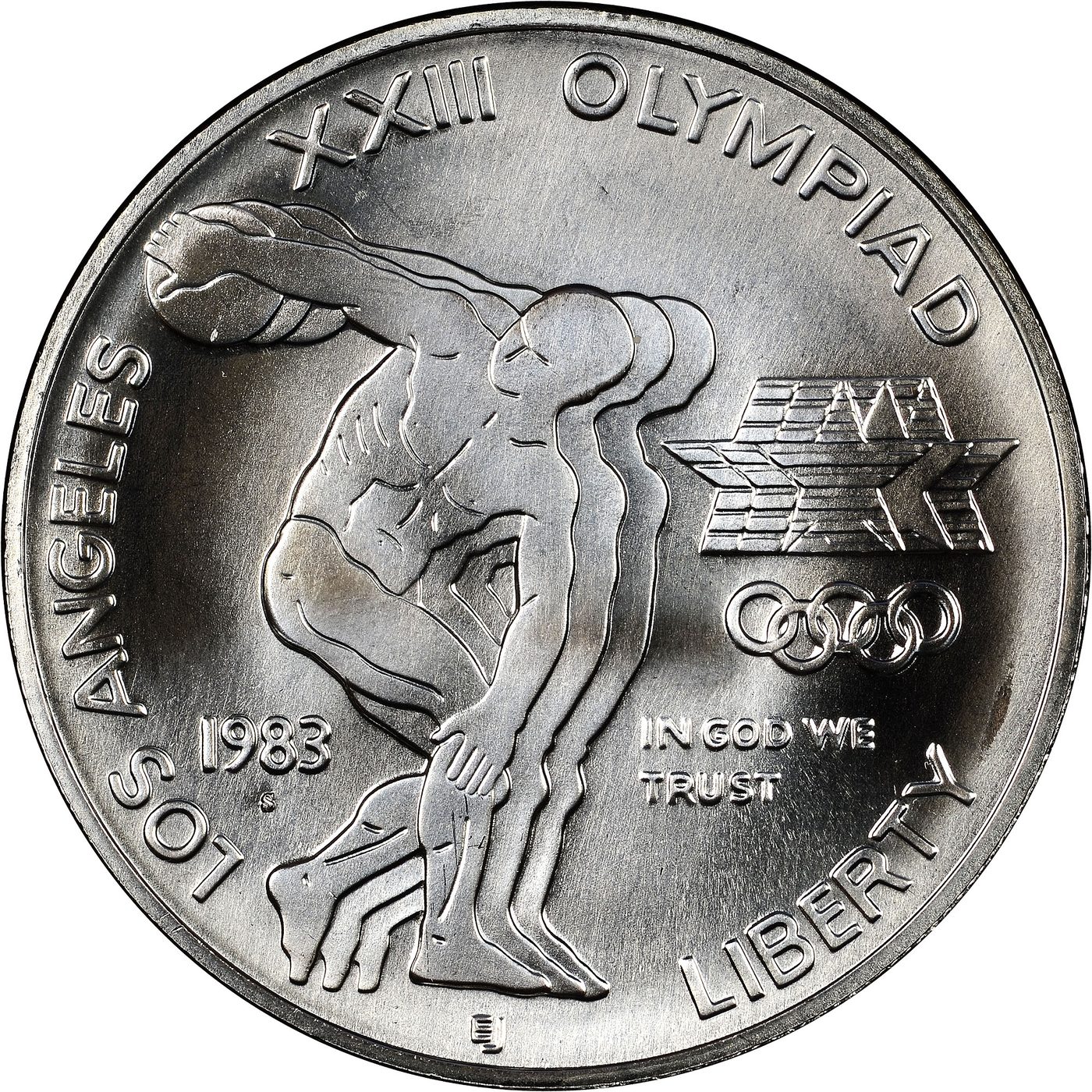
The coin that paid for an Olympics
For 83 years, the United States had not struck a single commemorative silver dollar. The last one — the Lafayette dollar of 1900 — was a distant memory. Then Los Angeles won the 1984 Summer Olympics, and the organizers faced a uniquely American problem: these would be the first privately financed Games of the modern era. No federal bailout, no taxpayer guarantee. They had to raise the money themselves.
Congress reached for an old idea. In 1982 it passed Public Law 97-220, authorizing a set of Olympic coins — two silver dollars and a $10 gold piece — and built a surcharge into every one. Buy the 1983 dollar and $10 of your purchase price went directly to the Games. Buy the gold coin and $50 did. Sales weren't a souvenir; they were fundraising.
This dollar was the first to appear. It followed the 1982 Washington half dollar that had revived the commemorative program after a 28-year gap — but it was the first commemorative silver dollar the Mint had issued since the Lafayette piece of 1900. By the time the Olympic coin program closed, the surcharges had delivered roughly $73.4 million, split evenly between the Los Angeles Olympic Organizing Committee that staged the Games and the U.S. Olympic Committee that trained the athletes.