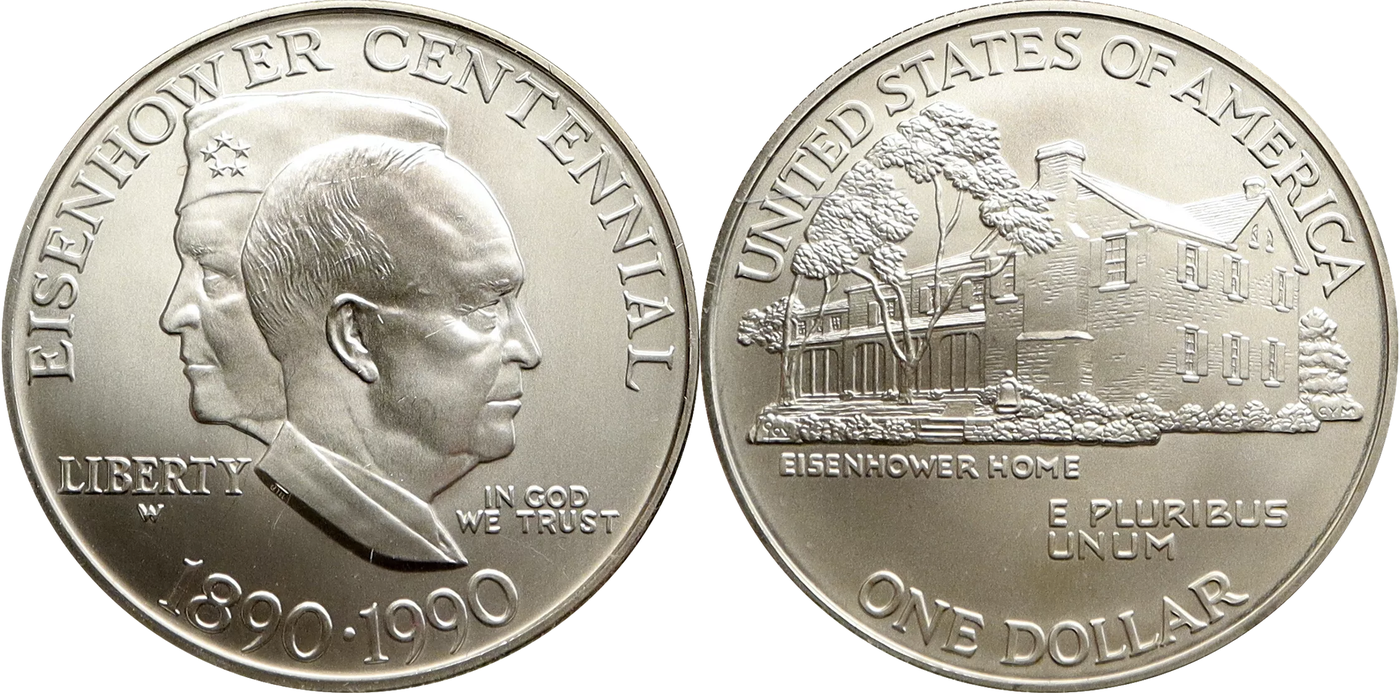
The story behind the coin
Dwight D. Eisenhower was born in 1890. A hundred years later, Congress wanted a coin for the centennial — and for Ike, that meant a choice. Which Eisenhower? The five-star general who planned the D-Day invasion, or the two-term president who steered America through the calm, anxious 1950s?
The answer was both. Congress authorized the coin through the Dwight David Eisenhower Commemorative Coin Act of 1988 (Public Law 100-467), signed by President Reagan on October 3, 1988. The Mint struck and released the dollar in early 1990, the centennial year — the dates "1890–1990" run right across the coin's face.
Here is the part that makes this dollar genuinely unusual. Modern US commemoratives carry a surcharge — a few dollars added to the price, set aside by law for a cause: a museum, a memorial, an Olympic team. The Eisenhower dollar's surcharge went somewhere else entirely. By act of Congress, the money was directed toward reducing the national debt of the United States. It is one of the very few US commemoratives ever aimed at the Treasury itself rather than a sponsoring organization — a fittingly Eisenhower gesture, given how much the fiscally cautious president worried about what the country owed.