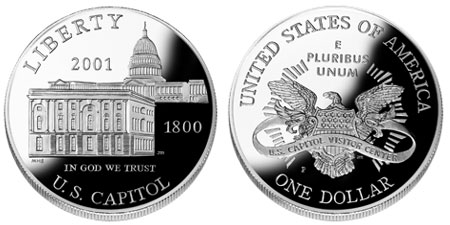
The story behind the coin
For decades, anyone could walk up the steps of the U.S. Capitol and into the building. Then, on July 24, 1998, a gunman pushed through a security checkpoint and opened fire, killing two Capitol Police officers. The idea of a controlled, secure entrance — kicked around Washington since the 1960s — suddenly had urgency.
Congress answered partly with money, and partly with a coin. The United States Capitol Visitor Center Commemorative Coins Act of 1999 (Public Law 106-126) authorized three commemorative coins: a clad half dollar, this silver dollar, and a five-dollar gold piece. Every coin carried a surcharge — an extra fee added on top of the metal-and-minting cost — and that surcharge was earmarked for the Capitol Preservation Fund to help build the new center.
The result was one of the most literal coins the Mint has ever made. You bought the dollar; ten dollars of your purchase went into a hole in the ground beneath the East Front of the Capitol. The center that money helped fund — 580,000 square feet on three underground levels — finally opened in December 2008, years late and far over budget, reshaped along the way by the attacks of September 11, 2001.