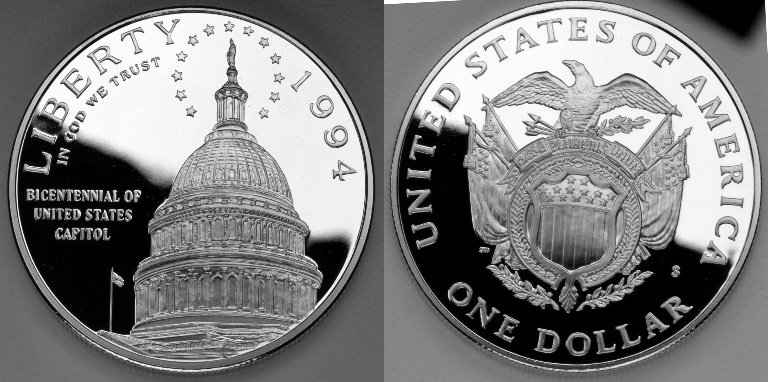
Two centuries from a cornerstone
On September 18, 1793, George Washington put on a Masonic apron, walked to a muddy hill on the Potomac, and laid the cornerstone of the United States Capitol with his own hands. The building that rose from that stone would take decades to finish, burn in the War of 1812, and grow a great cast-iron dome during the Civil War. Two hundred years after that first stone, Congress decided the anniversary deserved a coin.
The result was the U.S. Capitol Bicentennial silver dollar of 1994. Congress authorized it under Public Law 103-186 and capped the program at 500,000 coins. Sales ran from May 1, 1994, with striking set to stop after April 30, 1995 — a short, deliberate window, the way modern U.S. commemoratives work.
Here's the part collectors love. Every coin carried a $15 surcharge on top of its price, and that money went straight into the Capitol Preservation Fund, overseen by the U.S. Capitol Preservation Commission. So a coin honoring the Capitol's 200th birthday also paid, dollar by dollar, to keep the real building standing. The story on the coin and the money behind it pointed at the same place.