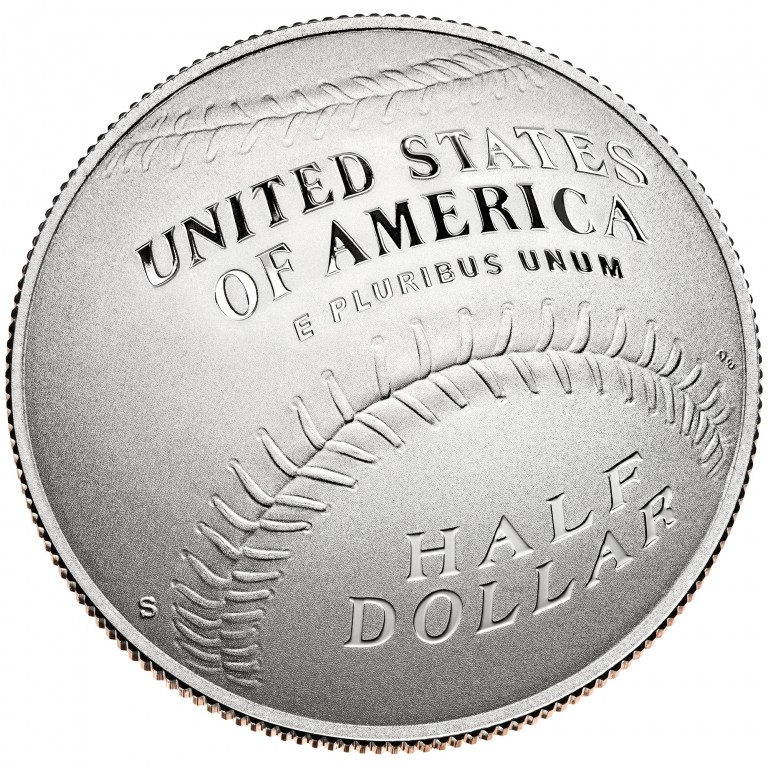
The coin that wasn't flat
For 222 years, every coin the United States struck was flat. Two faces, a flat field, a raised rim — the same basic disc whether it left the Mint in 1794 or 2013. Then, in 2014, that broke.
The reason was an anniversary. The National Baseball Hall of Fame in Cooperstown, New York opened its doors in 1939, and Congress wanted to mark its 75th year with coins. Baseball is round. A baseball glove cups inward. Someone at the Mint asked the obvious question nobody had ever answered with a U.S. coin: what if the coin curved too?
So Congress wrote it into the law. The National Baseball Hall of Fame Commemorative Coin Act — Public Law 112-152, signed August 3, 2012 — didn't just authorize coins. It told the Mint to make them concave on one side and convex on the other, and it pointed to a specific model: a curved coin the Monnaie de Paris (the French Mint) had struck in 2009 for the International Year of Astronomy. The Mint also leaned on technical help from the Royal Australian and Perth Mints, who had bent metal this way before. America was, in this one respect, a latecomer — and it knew it.
The result was three coins in one program: a $5 gold piece, a silver dollar, and this — the clad half dollar, the affordable one, the one most people actually bought.