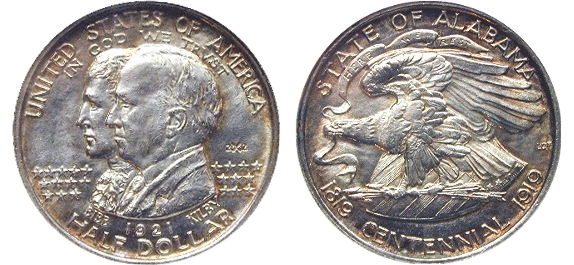
The story behind the coin
Alabama turned a hundred years old in 1919, and the state wanted a souvenir worth keeping. The plan was a coin — a half dollar the state could sell above face value, with the profit going to mark the centennial.
Congressman Lilius Bratton Rainey carried the bill. It started as a commemorative quarter, got amended to a half dollar along the way, and became law on May 10, 1920, when President Woodrow Wilson signed it. The state's centennial commission would buy the coins from the Mint at face value, then sell them to the public for a dollar each — the gap was the fundraiser.
The coins arrived late, but they arrived in style. President Warren G. Harding came to Birmingham on October 26, 1921, and the half dollars went on sale to the crowd that day. The coin you can hold today was, for a few thousand buyers, a literal memento of the day a sitting president came to town.