Designer
Charles E. Barber
For 37 years, almost every coin in an American pocket bore his mark.
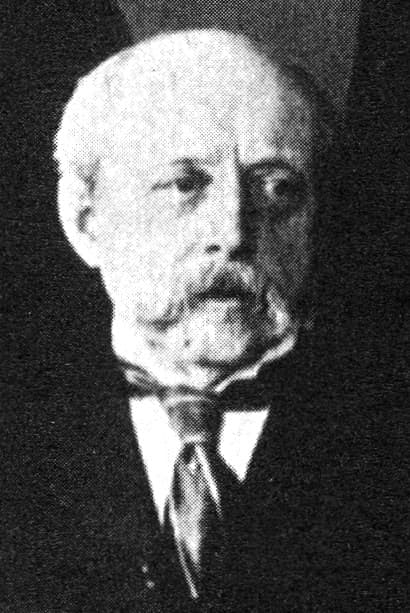
He was the most powerful coin designer in America for nearly four decades — and the most resented. When a famous sculptor tried to give the country a beautiful gold coin, Charles Barber said it couldn't be struck. He was the Mint man who knew machines, fighting artists who knew beauty. The truth is he was both.
The engraver who inherited a job
Charles Edward Barber was born in London on November 16, 1840, into the family business. His father, William Barber, was an engraver. In 1852 the family sailed for the United States, and the boy learned his craft the way most engravers did then — at his father's elbow, cutting metal until his hand obeyed him.
In 1869 he joined the United States Mint in Philadelphia as an assistant engraver, working under his father, who had become the Mint's fifth Chief Engraver. When William died in 1879, the son stepped into the chair. On January 20, 1880, President Rutherford B. Hayes made it official: Charles E. Barber was the sixth Chief Engraver of the United States Mint.
He held the job until the day he died — 37 years. No one before or since has shaped the look of American money for so long. If you spent a dime, a quarter, a half dollar, or a nickel in the United States between the 1880s and the First World War, the odds were good you were holding a Barber.
That is also why so many people disliked him. The Chief Engraver controlled the dies. An outside artist who wanted to put a design on a coin had to get past Barber — and Barber, a Mint man to the bone, believed coins were machines first and art second.
A craftsman who answered to the press, not the muse
Barber's style is sober, classical, and built to survive. His Liberty heads wear coronets and laurel; his eagles are stiff and heraldic, lifted from the Great Seal. He drew on French coinage of the era — the "Ceres" head used on France's money — but he flattened and tamed it. Nothing in a Barber design fights the coining press.
That was the point. A circulating coin, in Barber's mind, had to do four things: strike cleanly in one blow, stack flat, wear slowly, and come off the dies a million times without trouble. The relief — how far the design rises off the surface — had to stay low, because high relief means metal that won't flow into the deep parts of the die in a single strike. Beauty that the machine couldn't repeat was, to him, no use at all.
His critics called the results dull. The sculptor Augustus Saint-Gaudens, asked about Barber's silver coins, reportedly said the Liberty head looked as if it had been "designed by a young lady of sixteen" and was "beneath criticism." The artist Kenyon Cox called it "disgraceful." Harper's Weekly sniffed that "the mountain had labored and brought forth a mouse." (These barbs are well documented and quoted often; they are opinions of the day, not verdicts of history.)
But Barber was right about the machines, and the most famous coin fight in American history proved it.
The fight over the beautiful gold coin
In 1907, President Theodore Roosevelt set out to make the nation's coins beautiful. He turned to Saint-Gaudens, the finest sculptor in America, to redesign the twenty-dollar gold piece, the double eagle. Saint-Gaudens gave it a striding Liberty in soaring high relief — a small sculpture, not a coin.
Barber said, flatly, that no mint could strike it. He was not being a snob; he was being an engraver. The first ultra-high-relief pieces took up to nine blows of the press to bring up the detail, one coin at a time. Even a toned-down "high relief" version still needed three strikes apiece — hopeless for the millions a country needs.
So Barber did what Roosevelt and the dying Saint-Gaudens could not stop: by late 1907 he had lowered the relief until the double eagle struck in a single blow. The coin that resulted is still considered one of the most beautiful America ever made — but it is Saint-Gaudens's vision filtered through Barber's machines. The artist got the glory. The engraver got it onto the press.
Here the record cuts against the old story. Barber is often painted as the villain who throttled good design out of envy. Recent scholarship, drawing on letters and objects held by his descendants, argues that his long-assumed feuds — with his colleague George T. Morgan, even with Roosevelt — were exaggerated, and that he was on warm terms with people he was supposed to have hated. He was a hard, conservative technician. The cartoon of a jealous saboteur is harder to support than collectors once assumed.
The nickel that became a swindle
Barber's best-known coin started with politics. The industrialist Joseph Wharton, who had nickel-mining interests, lobbied for more nickel in the nation's coinage. In the early 1880s the Mint ordered Barber to design a new five-cent piece. He put a left-facing Liberty on the obverse — the heads side — and on the reverse a large Roman numeral V, ringed by a wreath, to signal five cents.
He left one word off: CENTS. The Mint reasoned that a big "V" on a nickel-sized coin said "five cents" plainly enough — just as the three-cent pieces of the day carried no denomination word and caused no trouble.
It caused trouble. The new nickel was close in size to the five-dollar gold piece, and its reverse, with no "CENTS," carried only a "V." Sharpers gold-plated the nickels, added reeding, and passed them as five-dollar gold coins. The Mint stopped the presses and Barber recut the reverse to add the word CENTS, which began circulating partway through 1883.
Collectors tell a wonderful story about a deaf-mute con man named Josh Tatum who supposedly walked into shops, bought a five-cent item, paid with a gold-plated nickel, and pocketed the change — never saying it was a five-dollar coin, so never lying. It is a great tale, and almost certainly a legend: numismatic researchers note there are no court records, no census trace, and no newspaper accounts of any such swindler. Enjoy the story; don't bank on it.
The episode left two coins. The 1883 "No Cents" nickel — roughly five and a half million struck before the fix — was hoarded by the public who assumed the recalled coin would be rare, so it survives today in surprising numbers and stays one of the most affordable old U.S. coins you can hold in mint condition. The "With Cents" version that replaced it, struck in far larger numbers, was not hoarded — and is genuinely scarcer in high grade. It is one of coin collecting's neatest reversals: the coin everyone saved is common, and the coin nobody bothered with is hard to find.
Career timeline
- 1840Born in London, England, on November 16.
- 1852Emigrates to the United States with his family.
- 1869Joins the U.S. Mint in Philadelphia as an assistant engraver under his father, William Barber.
- 1880Appointed sixth Chief Engraver of the U.S. Mint by President Rutherford B. Hayes (Jan. 20).
- 1883Designs the Liberty Head 'V' nickel; the 'No Cents' reverse is quickly revised to add CENTS after the gold-plating fraud.
- 1891–92After a failed design competition, is ordered to design the dime, quarter, and half dollar himself — the Barber coinage, struck from 1892.
- 1892–93Designs the Columbian Exposition half dollar and the Isabella quarter for the World's Fair.
- 1907Opposes Saint-Gaudens's high-relief double eagle as unstrikable, then lowers its relief so it can be mass-produced.
- 1917Dies in Philadelphia on February 18, still Chief Engraver; succeeded by George T. Morgan.
Key facts
- Born
- November 16, 1840 — London, England
- Died
- February 18, 1917 — Philadelphia, Pennsylvania
- Nationality
- American (born British)
- Role
- Sixth Chief Engraver, U.S. Mint (1880–1917)
- Appointed by
- President Rutherford B. Hayes
- Signature coins
- Liberty Head 'V' nickel; the Barber dime, quarter, and half dollar (1892–1916)
- Also designed
- Columbian Exposition half dollar, Isabella quarter, Hawaiian coinage of 1883
- Succeeded by
- George T. Morgan
Questions collectors ask
Who designed the Liberty Head 'V' nickel?
Charles E. Barber, Chief Engraver of the U.S. Mint, designed the Liberty Head nickel, which entered circulation in 1883. It is often called the 'V' nickel for the large Roman numeral on the reverse.
Why does the 1883 nickel come in 'No Cents' and 'With Cents' versions?
Barber's first reverse showed only a Roman numeral 'V' and no denomination word. The coin was close in size to a five-dollar gold piece, and swindlers gold-plated it to pass it as gold. The Mint stopped production and Barber recut the reverse to add the word CENTS partway through 1883.
Is the Josh Tatum racketeer-nickel story true?
Probably not. The tale of a deaf-mute con man who passed gold-plated nickels without ever speaking is told everywhere, but researchers have found no court records, census trace, or newspaper accounts to back it up. Treat it as a great legend, not documented history.
Did Charles Barber really sabotage Saint-Gaudens's gold coin?
He opposed it on practical grounds — the high relief took many strikes per coin and could not be mass-produced — and he lowered the relief so it could be. He is often cast as a jealous villain, but recent scholarship using his descendants' papers suggests his rivalries were overstated. He was a conservative technician, not necessarily a saboteur.
What is 'Barber coinage'?
It's the nickname for the dime, quarter, and half dollar Barber designed after a national design competition failed in 1891. The Mint Director ordered Barber to do the job himself, and the coins were struck from 1892 into the 1910s. The 1894-S dime, struck in tiny numbers, is one of the most famous rarities in U.S. coinage.
Sources
colcur earns a commission when you buy on eBay through our links — it never changes your price. Every listing opens on eBay USA; other marketplaces are not indexed yet.