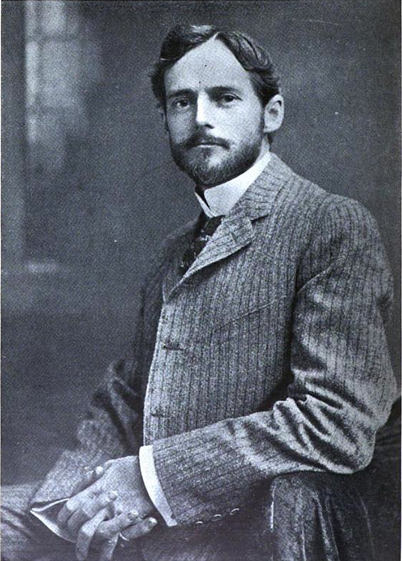
The artist who got his coin changed behind his back
Picture a working sculptor in 1917, well-known, mid-career, opening a box of the newest U.S. quarters — coins he had designed — and finding them altered. Not by him. The Mint had made changes to his work and never asked. He sat down and wrote a furious letter.
That sculptor was Hermon Atkins MacNeil, and the coin was the Standing Liberty quarter. By the time it landed in American pockets, MacNeil was already one of the country's most respected artists. The fight he had with the Mint over those quarters is the most human story in the whole episode — an artist insisting his vision matter against a federal agency that thought a coin was just a coin.
MacNeil was born on February 27, 1866, in Everett, Massachusetts. He trained at the Massachusetts Normal Art School — the school that became the Massachusetts College of Art and Design — and graduated in 1886. His first job was teaching, not sculpting: he taught industrial art and drawing to engineering students at Cornell University, showing them how to model in clay and sketch a machine part from every angle. It was practical work. The grand stuff came later, in Paris.
In Paris he studied at the Académie Julian and the École des Beaux-Arts — the two engines of academic art training in the late 1800s — under the French sculptors Henri Chapu and Alexandre Falguière. From them he absorbed a clean, classical sense of the human figure: balance, grace, the body as something noble. That training is the bone structure under everything he made, the quarter included.