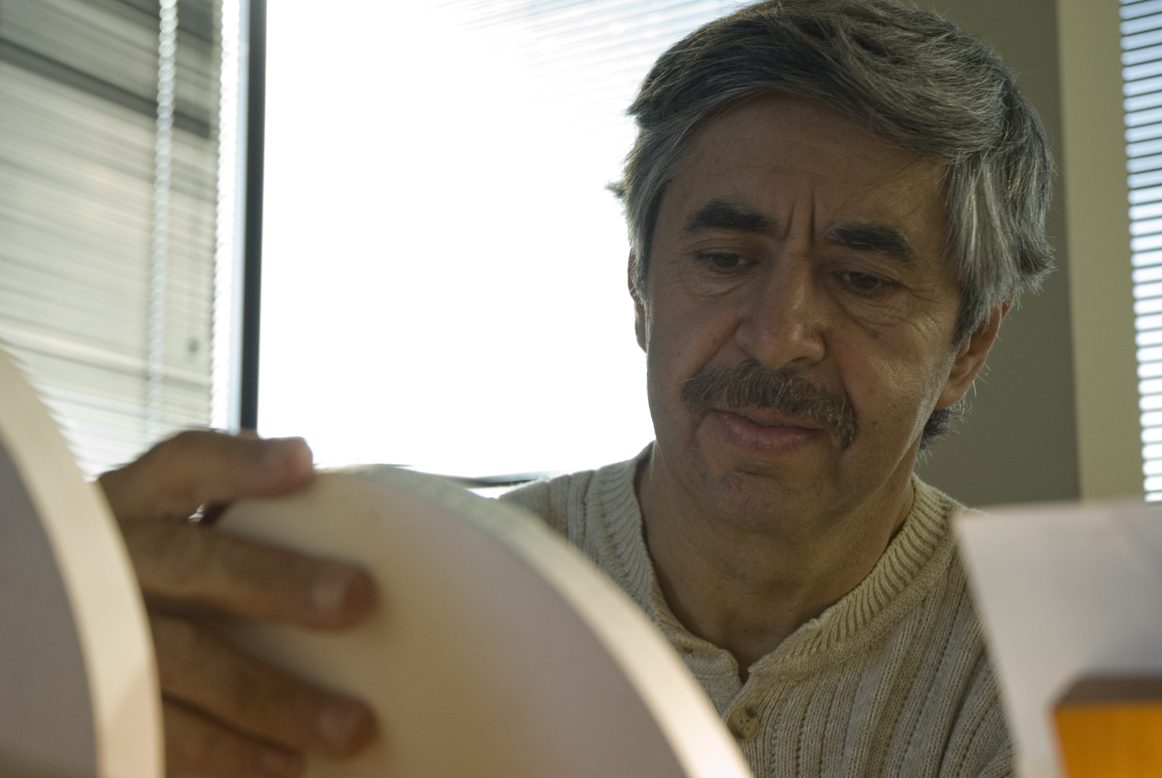
Designer

Alex Shagin

The Soviet-trained master who traded a mint career for artistic freedom

Alex Shagin
Garretcheves (own work), via Wikimedia Commons · public domain · source

In 1978, a star sculptor at the Leningrad Mint applied to leave the Soviet Union. He was stripped of his job that day and waited a year with no income. Alex Shagin gave all of it up for one thing the state would not grant him: the freedom to design what he wanted.

Who he is

Alex Shagin was born near Leningrad on January 21, 1947, the only child of George and Ekaterina Shagin. He trained at the Vera Mukhina School of Arts and Design — one of the Soviet Union's leading art academies — graduating in the early 1970s. After a stint in the Soviet Army, he apprenticed at the Leningrad Mint.

His diploma project was a medal of Peter the Great. It impressed the authorities enough that they recommended him as an artist of the mint, and by the mid-1970s he was a leading designer there. The work was relentless. He was expected to produce a finished medal roughly every two months — and every design first had to clear the state's Council of Art Medals before a die was ever cut.

Then came a turning point. In 1978 Shagin visited a medals exhibition in Poland and saw how freely his colleagues there worked — choosing their own subjects, answering to no committee. He came home and applied for an exit visa. He was removed from his post immediately and went more than a year without income before the visa came through. He emigrated to the United States in 1979 and has worked from Southern California ever since.

His craft and role

A medal is a small relief sculpture struck in metal — relief being the raised design that stands up from the flat field of the coin. It is harder than it looks: an artist has to compress a whole idea into a disc you can hold in your palm, and make it read at a glance. Shagin built his reputation on doing exactly that, and doing it with feeling rather than stiffness.

In the Soviet years his subjects were grand and official — Peter the Great, Michelangelo, the Apollo–Soyuz spaceflight, the 1980 Moscow Olympics. In America he became a prolific freelance medallist, free at last to choose. His American work ranges widely: a medal for the 1984 Los Angeles Olympics, an Anne Frank commemorative, a J.S. Bach tercentennial medal, convention medals for the American Numismatic Association, and pieces for the Ronald Reagan Presidential Library. His work is held by the Hermitage, the Smithsonian Institution, the British Museum, Israel's Yad Vashem, and the Swedish Royal Medallic Collection.

His one brush with circulating U.S. coinage came in 2001. The Mint issued three commemorative coins to help pay for the new Capitol Visitor Center, and the reverse — the "tails" side — of the clad half dollar was credited as a composite of designs by Shagin and fellow medallist Marcel Jovine. It is a fitting coin for him: a careful arrangement of 16 stars for the 16 states that existed in 1800, ringing inscriptions that honor the 6th Congress — the kind of dense, meaning-packed composition the medal tradition prizes.

Key facts

Born
January 21, 1947, near Leningrad, Russia
Nationality
Russian-born American
Training
Vera Mukhina School of Arts and Design; apprenticed at the Leningrad Mint
Emigrated to the U.S.
1979
U.S. coin design
2001 Capitol Visitor Center clad half dollar reverse (with Marcel Jovine)
Notable medals
1980 Moscow & 1984 Los Angeles Olympics; Anne Frank (1988); J.S. Bach tercentennial (1985)
Top honor
J. Sanford Saltus Award, American Numismatic Society (1995)

Questions collectors ask

What U.S. coin did Alex Shagin design?

He is credited on the reverse of the 2001 Capitol Visitor Center clad half dollar, where his work was combined with a design by Marcel Jovine. The reverse shows 16 stars for the 16 states of 1800, around inscriptions honoring the 6th Congress.

Why did Shagin leave the Soviet Union?

He was a successful artist at the Leningrad Mint, but every design had to be approved by a state committee. After seeing the freedom his colleagues had in Poland in 1978, he applied for an exit visa, lost his job that day, and waited over a year before emigrating in 1979.

Is Alex Shagin better known for coins or medals?

Medals. He is primarily a medallic artist — small relief sculptures struck in metal — with a single U.S. coin credit. His medals are held by major museums including the Hermitage, the Smithsonian, and the British Museum.

What is the Saltus Award he won?

The J. Sanford Saltus Award is the American Numismatic Society's highest honor for signal achievement in the art of the medal. Shagin received it in 1995.

Sources