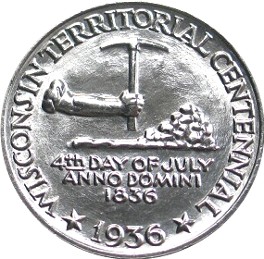
The story behind the coin
On the Fourth of July, 1836, a frontier governor named Henry Dodge took office and the Wisconsin Territory officially came to life. A hundred years later, the state wanted a coin to mark the moment.
That was the spirit of the 1930s. Across the decade, dozens of cities, states, and committees lobbied Congress for their own commemorative half dollar — a coin the U.S. Mint would strike but a private group would sell, usually at a markup, to raise money for an anniversary or a monument. It was a craze, and Wisconsin joined it.
Senator Robert M. La Follette Jr. introduced the bill in January 1936. President Franklin Roosevelt signed it into law on May 15. The coins were struck that July at the Philadelphia Mint — and there the plan started to wobble. The big centennial celebrations ran from late June into the first week of July. By the time the half dollars were actually ready to ship, the candles were out and the crowds had gone home. A commemorative coin sells on excitement, and Wisconsin's arrived after the excitement had passed.