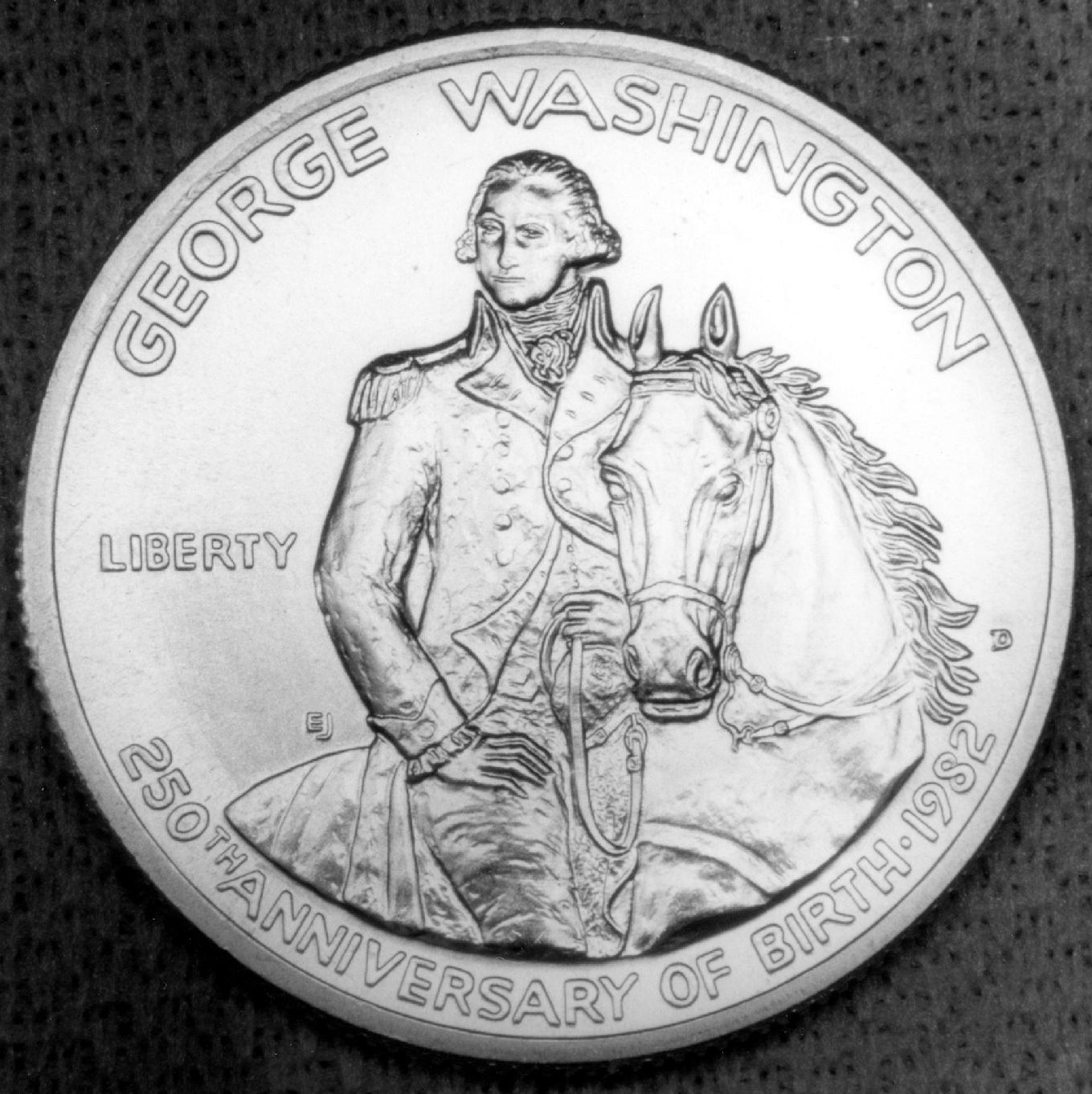
The coin that ended a 28-year silence
For most of a generation, the United States simply stopped making commemorative coins. The last one — a half dollar honoring Booker T. Washington and George Washington Carver — left the press in 1954. Then nothing. For 28 years.
The reason was a mess of the Mint's own making. In the 1930s, commemoratives had spun out of control: too many designs, too many local sponsors, too many coins sold at a markup to anyone with a cause. Congress grew suspicious that the flood made counterfeiting easier and the program look like a racket. In 1939 it began shutting the whole thing down, and after 1954 the door closed entirely.
What reopened it was a birthday. 1982 marked 250 years since George Washington was born in 1732. Congress passed Public Law 97-104, authorizing a silver half dollar to mark the occasion — and with that single coin, the modern commemorative era began. Collectors split US commemoratives into two ages: the classic ones, 1892 to 1954, and the modern ones, 1982 to today. This is the coin that opens the second book.
It carried a second distinction that delighted anyone who remembered older money. Since 1965, US coins had been struck in copper-nickel "clad" — no precious metal at all. The 1982 Washington half was struck in 90% silver, the first time the Mint had used that classic alloy since 1964. After nearly two decades of pocket change with no silver in it, the metal was back, if only for a coin you bought rather than spent.