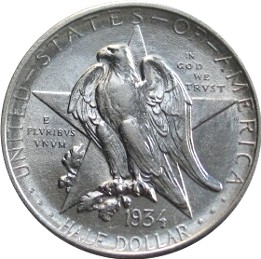
The story behind the coin
In 1836 a few thousand Texans broke away from Mexico and made their own republic. A hundred years later, Texas wanted to throw itself a party — and it needed money to do it.
So Texas turned to a trick that was wildly popular in the 1930s: the commemorative coin. Congress could authorize a special half dollar, the Mint would strike it at face value, and a sponsor could then sell it to collectors at a markup. The profit funded the celebration. On June 16, 1933, President Franklin Roosevelt signed the act — pushed through by Texas Senator Tom Connally and Representative Wright Patman — authorizing up to 1,500,000 half dollars "in commemoration of the one hundredth anniversary in 1936 of the independence of Texas."
The coins sold for a dollar each. The extra fifty cents above face value — the surcharge, the markup baked into the price — was meant to fund the Texas Memorial Museum at the University of Texas at Austin. It was history paying for a building about history.
There was just one problem. Texas struck these coins for five straight years, from 1934 through 1938, long after the centennial fever had cooled. Collectors and Texans simply stopped buying. By the end, the Mint had melted down more than half of every coin it made — a quiet admission that the party had run too long.