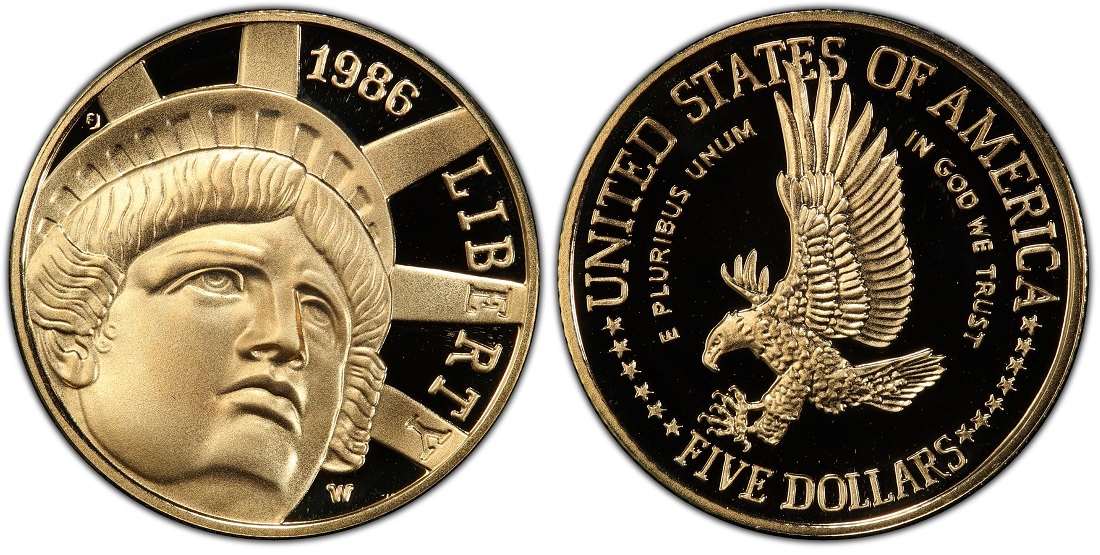
The story behind the coin
By the early 1980s the Statue of Liberty was falling apart. A century of salt air had eaten through her iron skeleton; her torch leaked, and rust was spreading behind the copper skin. Restoring her — and the crumbling immigration halls on nearby Ellis Island — would cost a fortune. The government's answer was a coin.
In 1985 Congress passed the Statue of Liberty–Ellis Island Commemorative Coin Act (Public Law 99-61). It authorized three coins for Liberty's 1986 centennial: a copper-nickel half dollar, a silver dollar, and a $5 gold piece. Each carried a surcharge — a built-in premium added to the price — and every cent of it went to the Statue of Liberty–Ellis Island Foundation, the private group, chaired by Chrysler boss Lee Iacocca, that was running the restoration.
The $5 gold coin carried the heaviest surcharge of the three: $35 per coin. It was also a milestone in its own right. The Mint had not struck a gold coin for circulation or collectors since 1929, when the Great Depression and the gold recall of 1933 ended the old gold standard. This little half eagle broke a 57-year silence.