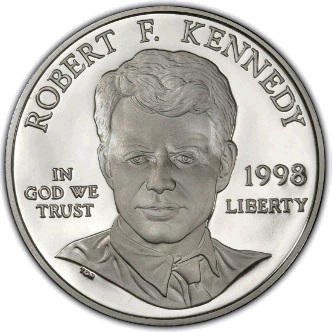
The story behind the coin
Robert F. Kennedy was shot in a Los Angeles hotel kitchen on June 5, 1968, hours after winning the California primary. He died the next day. He was 42.
Thirty years later, the U.S. Mint marked that anniversary with a silver dollar. Congress had authorized it back in 1994, in Public Law 103-328 — the same omnibus banking act that, among many other things, cleared this coin. The Mint sold it through 1998, the round number that gave the program its reason to exist.
This is how modern U.S. commemoratives work. Congress picks a person, a place, or an anniversary; authorizes a limited run; and attaches a surcharge — an extra dollar amount baked into the price that flows to a cause tied to the subject. Here, $10 from every coin went to the Robert F. Kennedy Memorial. You weren't just buying silver. You were donating, with a keepsake attached.
So why does a coin honoring one of the most famous Americans of the century feel like a footnote? Because by 1998 the Mint was issuing commemoratives by the fistful, collectors were fatigued, and this one had no gimmick of its own. Fewer than half the coins authorized ever sold. The RFK dollar's real fame, oddly, belongs to the coin standing next to it on the order form.