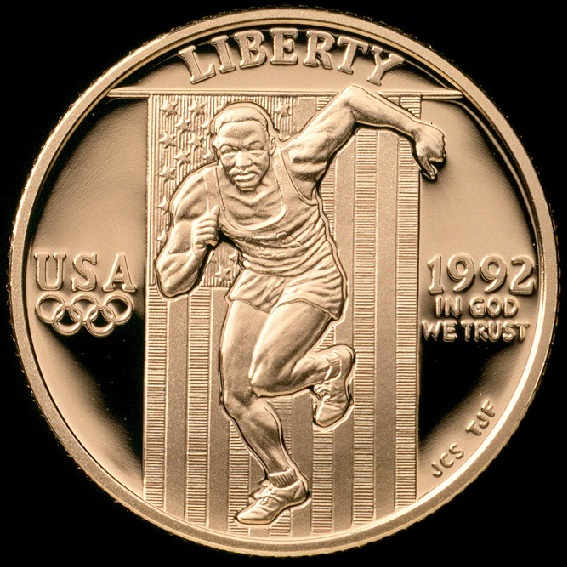
The story behind the coin
1992 was a double Olympic year. The Winter Games opened in Albertville, France, in February; the Summer Games followed in Barcelona, Spain, that July. The United States wanted to send its athletes in force — and Congress found a way to help pay for it without a single dollar of taxpayer money.
The tool was a commemorative coin. Under Public Law 101-406, signed on October 3, 1990, the Mint was authorized to strike a three-coin Olympic set: a copper-nickel clad half dollar, a silver dollar, and this small gold piece — a "half eagle," the old name for the five-dollar gold denomination. Collectors would pay a premium over the metal; the premium would go to the team.
Here is the clever part. Each coin carried a built-in surcharge — a fixed amount baked into the price and handed straight to the U.S. Olympic Committee. The gold $5 carried the largest of them: $35 per coin, on top of metal and minting cost. The silver dollar added $7; the half dollar, $1. Buy the gold coin and you weren't just buying gold. You were buying a runner a plane ticket.