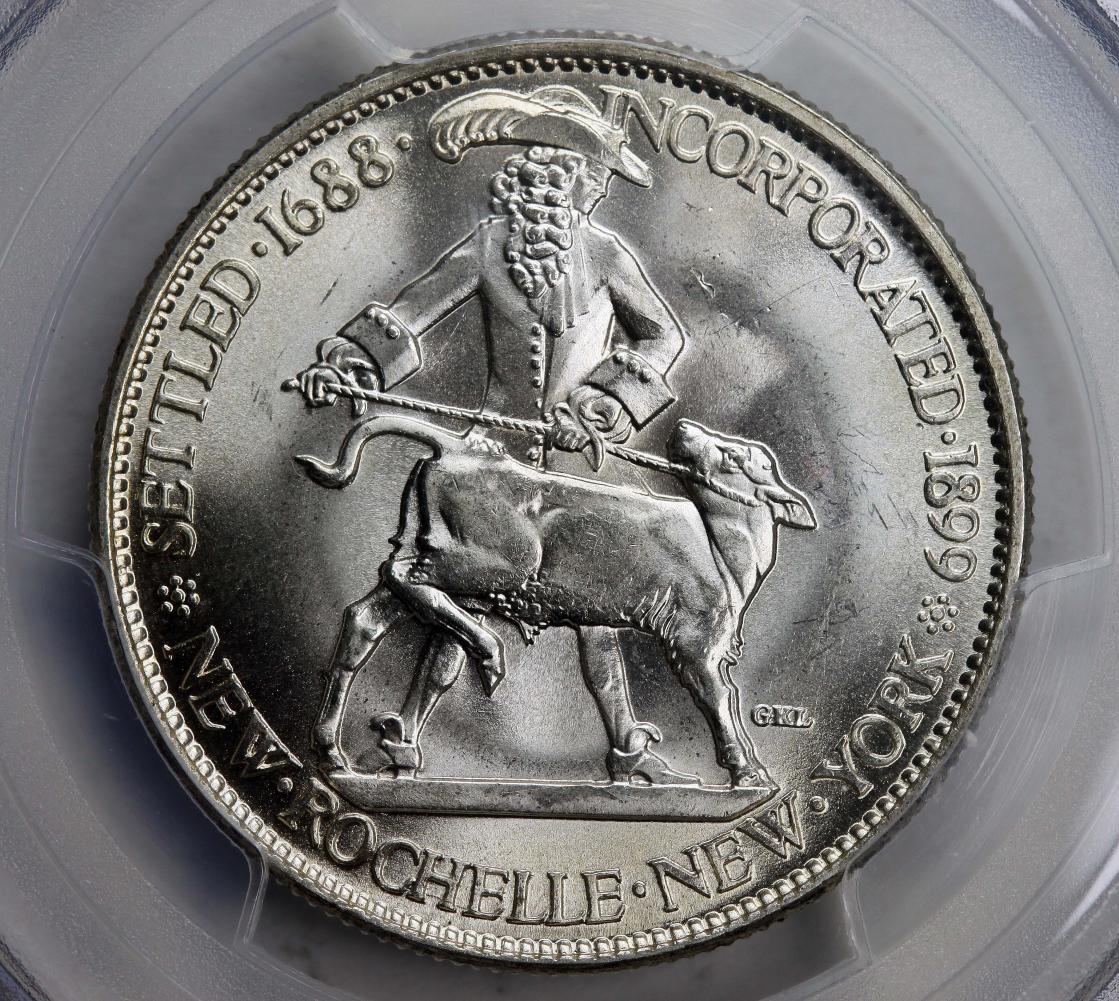
A rent paid in livestock
Here is the bargain at the heart of this coin. In 1689, Jacob Leisler bought roughly 6,000 acres along Long Island Sound from John Pell, lord of the Manor of Pelham. The price was not just money. The deed carried a quit-rent — a small recurring payment that kept the land from reverting to its old owner — and Pell's was charmingly specific: one fat calf, delivered every June 24th, if demanded.
On that land, Huguenots built a town. They were French Protestants who had fled persecution, and they named their new home New Rochelle after La Rochelle, the French port city many of them had left behind. They settled it in 1688.
By the 1930s, New Rochelle was a comfortable Westchester suburb of New York City planning its 250th birthday. Local coin collectors — the Westchester County Coin Club — saw a chance. A commemorative half dollar could honor the anniversary and raise money for the festival. The catch: those calf-and-deed details had to fit on a coin small enough to carry in a pocket.