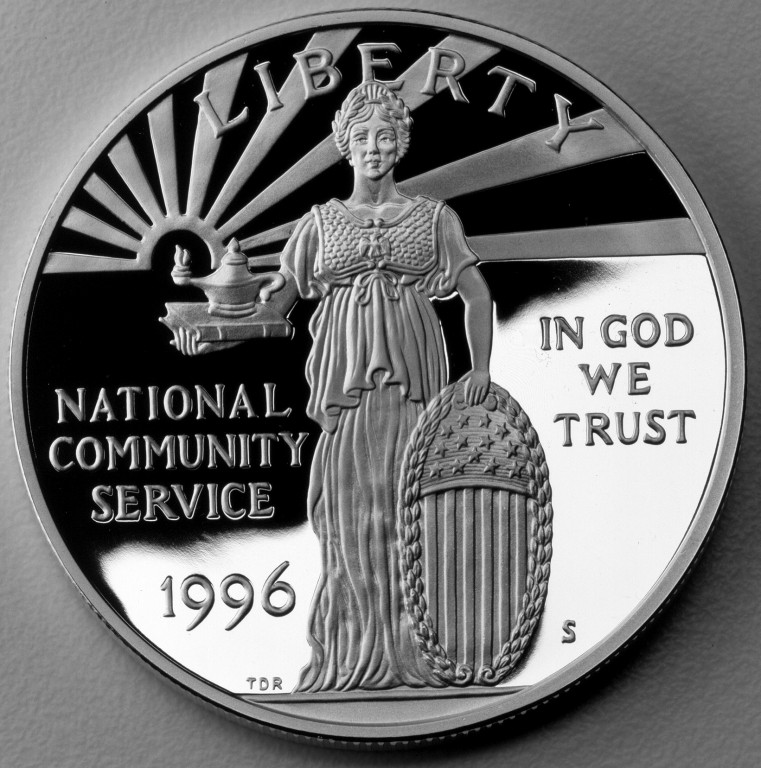
The story behind the coin
By 1996, American coin collectors were exhausted. Congress had been stamping out commemorative coins at a furious pace — there were so many programs that finishing a collection meant chasing dozens of new issues every year. The 1996 Atlanta Olympic series alone ran to sixteen coins. Collectors were angry, and they were voting with their wallets.
Into that fatigue came a quiet, well-meaning coin: a silver dollar honoring the millions of Americans who give their time to community service. The idea was simple and decent — celebrate volunteerism, and use the coin's sales to fund it. The timing could not have been worse.
The authority came tucked inside an unlikely law: the Riegle-Neal Interstate Banking and Branching Efficiency Act of 1994 (Public Law 103-328), a banking statute that also greenlit this dollar. The Mint was allowed to strike up to 500,000 coins. It sold a small fraction of that. Almost nobody noticed the coin in 1996 — which is exactly why it matters now.