US coin · series

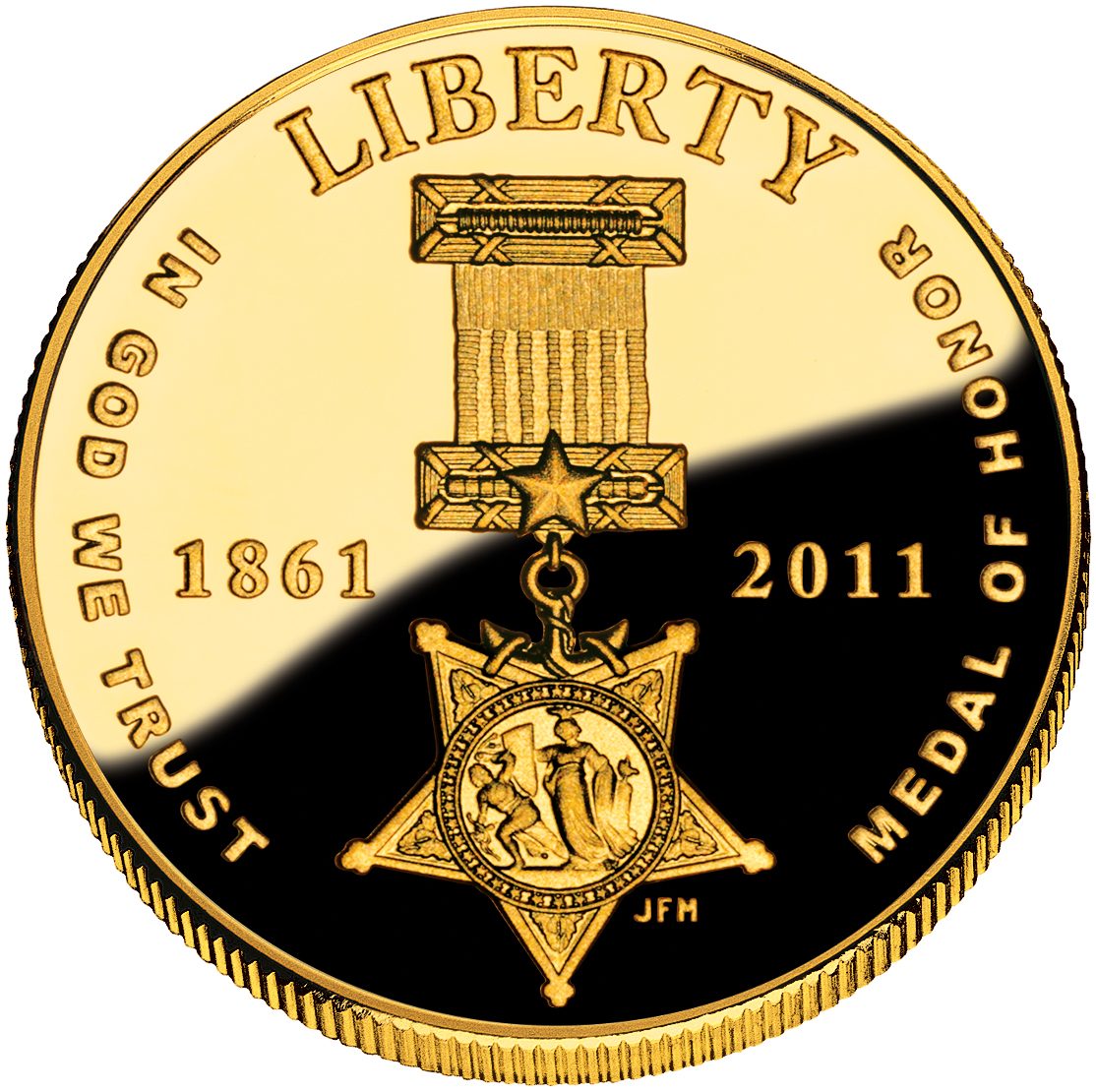
The 2011 Medal of Honor $5 Gold Coin

A coin for the medal a soldier can only earn — and almost never live to wear.

The 2011 Medal of Honor $5 Gold Coin
Joseph Menna (designer and engraver), United States Mint · public domain · source

In 2011 the U.S. Mint pressed the country's highest award for bravery into a coin barely the size of a nickel. It sold so few that today it is one of the scarcest gold commemoratives of its era.

The story behind the coin

The Medal of Honor is the only U.S. military decoration that a President of the United States awards in the name of Congress. It is given for valor in combat that goes "above and beyond the call of duty" — and it is so rarely earned that most recipients are honored after they have died.

That medal is the oldest combat award the country still gives. The Navy version was authorized in December 1861, in the dark first winter of the Civil War; the Army's followed in July 1862. The very first medals went to Union soldiers who hijacked a Confederate locomotive in the 1862 raid remembered as the Great Locomotive Chase. From that moment to today, the medal has been an unbroken thread through every American war.

In 2009, Congress decided that thread deserved a coin. The Medal of Honor Commemorative Coin Act of 2009 (Public Law 111-91) ordered up two coins for the 2011 calendar year — a silver dollar and this small $5 gold piece. Their purpose was not to circulate. They were sold to raise money, with a surcharge on every coin going to the Congressional Medal of Honor Foundation to fund its education, scholarship, and outreach work.

The design

The obverse — the heads side — does something quietly clever. Instead of inventing a new image, it shows the original medal: the Navy's design as authorized by Congress in 1861, the first version of the decoration ever struck. You are looking at a coin of a medal, the country's newest gold piece carrying its oldest award.

The reverse — the tails side — reaches for myth. It shows Minerva, the Roman goddess of wisdom and defensive war, standing with a shield in one hand and the Union flag in the other, flanked by a Civil War-era field cannon and its wheel. Minerva was the central figure on both the original Army and Navy medals, so the coin links the modern decoration back to its 1860s roots in a single image.

The obverse was designed by U.S. Mint Sculptor-Engraver Joseph Menna. The reverse came from Artistic Infusion Program designer Joel Iskowitz and was sculpted by Mint Sculptor-Engraver Michael Gaudioso. By law, the program's designs were meant to represent all three medal forms — Army, Navy, and Air Force — and to honor recipients past and present.

Key facts

Year struck
2011
Denomination
$5 (gold commemorative)
Composition
90% gold, 10% alloy
Weight
8.359 g
Diameter
0.850 in (21.59 mm)
Proof mint mark
W (West Point)
Uncirculated mint mark
P (Philadelphia)
Authorized maximum
100,000 gold coins
Approx. proof mintage
~18,000 (well below the cap)
Approx. uncirculated mintage
~8,200 (well below the cap)
Obverse designer
Joseph Menna
Reverse designer
Joel Iskowitz (sculpted by Michael Gaudioso)
Surcharge
$35 per coin to the Congressional Medal of Honor Foundation
Authorizing act
Medal of Honor Commemorative Coin Act of 2009 (P.L. 111-91)

Collecting it

Congress allowed up to 100,000 of these gold coins. Collectors bought a small fraction of that. Final sales settled at roughly 18,000 proofs and only about 8,200 uncirculated pieces — figures that put both versions among the lowest-mintage U.S. gold commemoratives of the modern era. The uncirculated coin, in particular, is genuinely scarce: a commemorative most people have never heard of, struck in numbers a single popular coin can dwarf.

Two versions exist, and the mint mark tells them apart. The proof — frosted devices against mirror-like fields — was struck at West Point and carries a W. The uncirculated, or "burnished," version was struck at Philadelphia and carries a P. (A proof is a specially polished collector strike; an uncirculated commemorative is struck once for collectors but without the proof's mirror finish.) Because so few uncirculated coins were made, that P is the one savvy collectors chase.

There are no famous die varieties or error rarities to hunt here — this is a one-year, two-mint program. The scarcity comes from the original low sales, not from any quirk of striking. For a coin its size, that combination of small gold content and small surviving population is what gives it weight beyond its bullion.

Questions collectors ask

How many 2011 Medal of Honor $5 gold coins were made?

Congress authorized up to 100,000, but far fewer sold. Final sales came to roughly 18,000 proofs (2011-W, West Point) and only about 8,200 uncirculated coins (2011-P, Philadelphia). Reported totals vary slightly by source and reporting date, but both versions ended well under the cap, making this one of the lower-mintage modern U.S. gold commemoratives.

What is the difference between the 2011-W and 2011-P versions?

The mint mark and finish. The 2011-W is the proof — struck at West Point with mirror-like fields and frosted design elements. The 2011-P is the uncirculated (burnished) version, struck at Philadelphia. The 2011-P had the much smaller mintage and is the scarcer of the two.

Is the coin made of solid gold?

It is 90% gold, 10% alloy — the classic U.S. gold standard. It weighs 8.359 grams and measures about 21.59 mm across, roughly the size of a U.S. nickel.

What does the coin actually depict?

The obverse shows the original 1861 Navy Medal of Honor design. The reverse shows Minerva, the goddess featured on the original Army and Navy medals, holding a shield and the Union flag, flanked by a Civil War field cannon.

Who got the money from these coins?

Each coin carried a $35 surcharge that the Mint paid to the Congressional Medal of Honor Foundation to fund its education, scholarship, and outreach programs.

Sources