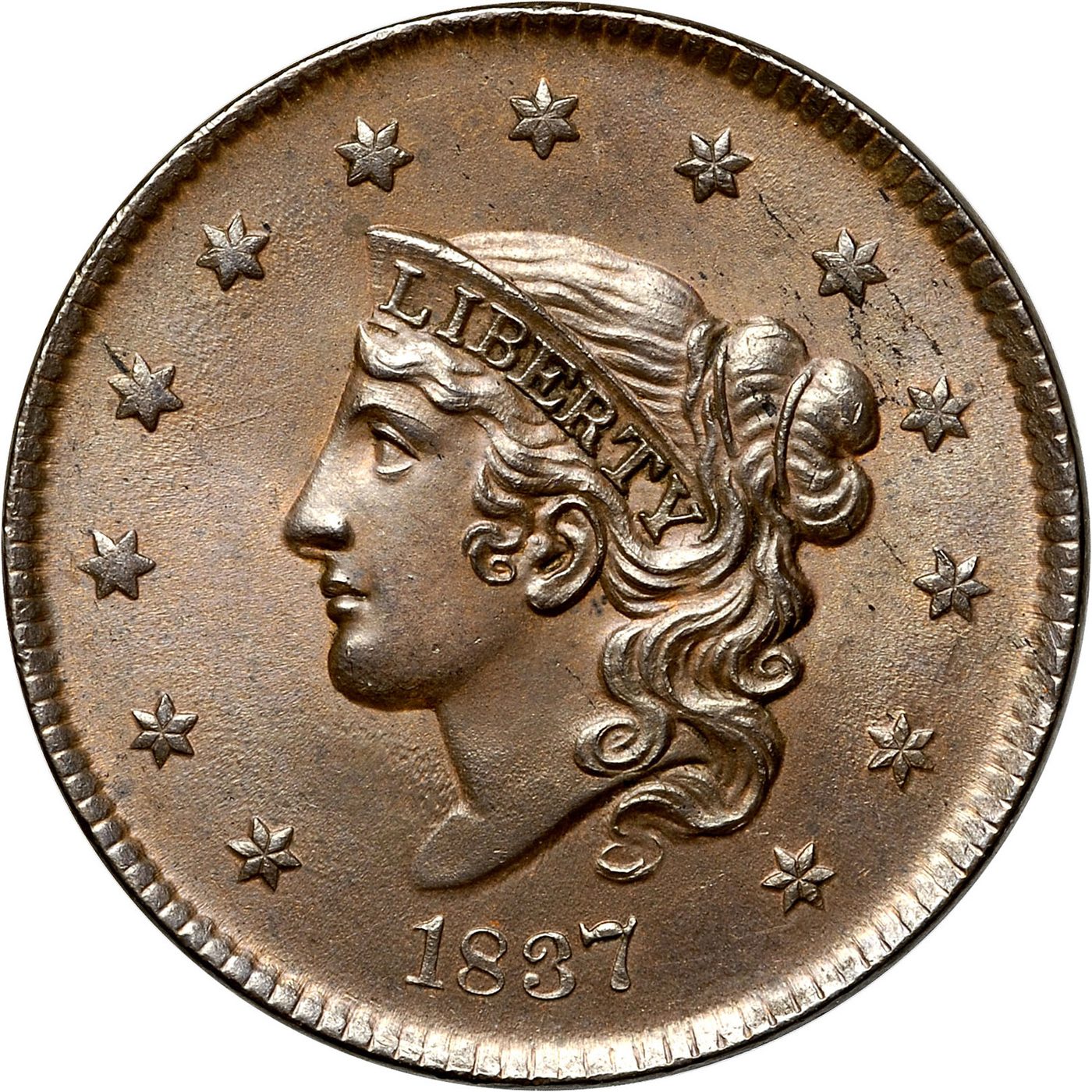
The story behind the coin
In the summer of 1835, the man who carved America's coins lost the use of his right hand.
William Kneass, the Mint's second Chief Engraver, suffered a stroke on August 28, 1835 — paralyzing his right side and ending his ability to cut a die. The Philadelphia Mint needed someone at the engraving bench, fast. That September it hired a gifted clockmaker-turned-die-sinker named Christian Gobrecht as "second engraver." Kneass kept the title; Gobrecht did the work.
This matters because the cent — the workhorse copper coin in every American pocket — was about to change. The portrait of Liberty in use since 1816, the so-called "Matron Head," was not loved. Later numismatists were blunt about it: the dealer-historian Walter Breen called it "a spectacularly ugly head of Ms. Liberty." Gobrecht set out to fix her.
He never quite stopped. From 1835 through 1839, the cent's obverse — the "heads" side — was reworked again and again, each tweak nudging Liberty toward the slimmer, more graceful look Gobrecht was already dreaming up for the Mint's future silver. The result is the Matron Head Modified cent: not one design but a restless run of them, the fingerprints of a new engraver feeling his way toward a new American coinage.