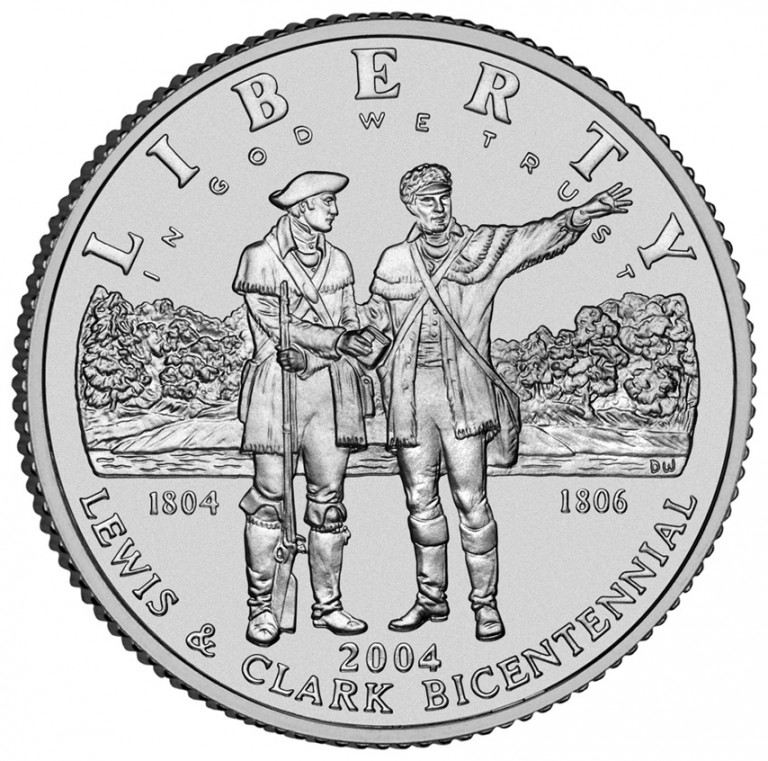
The story behind the coin
In May 1804, a few dozen men pushed a keelboat up the Missouri River and into a map that, for the young United States, was mostly blank. Meriwether Lewis and William Clark led them. Two and a half years and roughly 8,000 miles later, the Corps of Discovery came back having crossed the continent to the Pacific and returned — one of the great feats of exploration in American history.
Two hundred years later, Congress wanted to mark it. In 1999 it passed the Lewis and Clark Expedition Bicentennial Commemorative Coin Act — Public Law 106-126 — and President Clinton signed it on December 6 of that year. The law told the Mint to strike up to 500,000 silver dollars to help fund the bicentennial. The coins arrived in 2004, two centuries after the keelboat left.
Commemoratives like this aren't pocket change. Congress authorizes them one program at a time, the Mint sells them directly to collectors for a few years, and a built-in surcharge — an extra fee folded into the price — funnels money to a cause tied to the subject. Here the surcharge was $10 a coin. By law, two-thirds went to the National Lewis and Clark Bicentennial Council and one-third to the National Park Service. Buying the coin helped pay for the anniversary it celebrated.