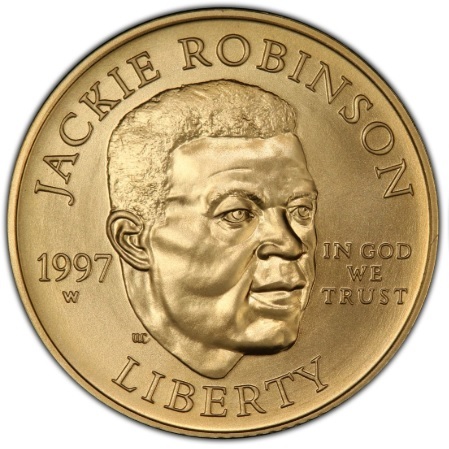
The story behind the coin
On April 15, 1947, Jackie Robinson stepped onto the field for the Brooklyn Dodgers and became the first Black player in the modern major leagues. He did it under a torrent of abuse — from opposing dugouts, from the stands, from teammates who circulated a petition to keep him off the roster. He answered with his bat, his speed, and a discipline that cost him more than anyone watching could see. He didn't just integrate baseball. He cracked open the idea that America's institutions could stay segregated.
Fifty years later, Congress decided gold was the right way to remember it. The Jackie Robinson Commemorative Coin Act — folded into the United States Commemorative Coin Act of 1996, Public Law 104-329, signed on October 20, 1996 — authorized a $5 gold coin and a $1 silver dollar for the anniversary. A surcharge on every sale was earmarked for the Jackie Robinson Foundation, the nonprofit Robinson's widow Rachel founded in 1973 to send minority students to college on scholarship. Buy the coin, fund a scholarship: that was the deal.
Then something strange happened. The coin barely sold. The Mint was authorized to strike up to 100,000 of the gold pieces. It sold a few thousand. The tribute to one of the most consequential Americans of the century became, almost by accident, one of the rarest coins the modern Mint has ever made.