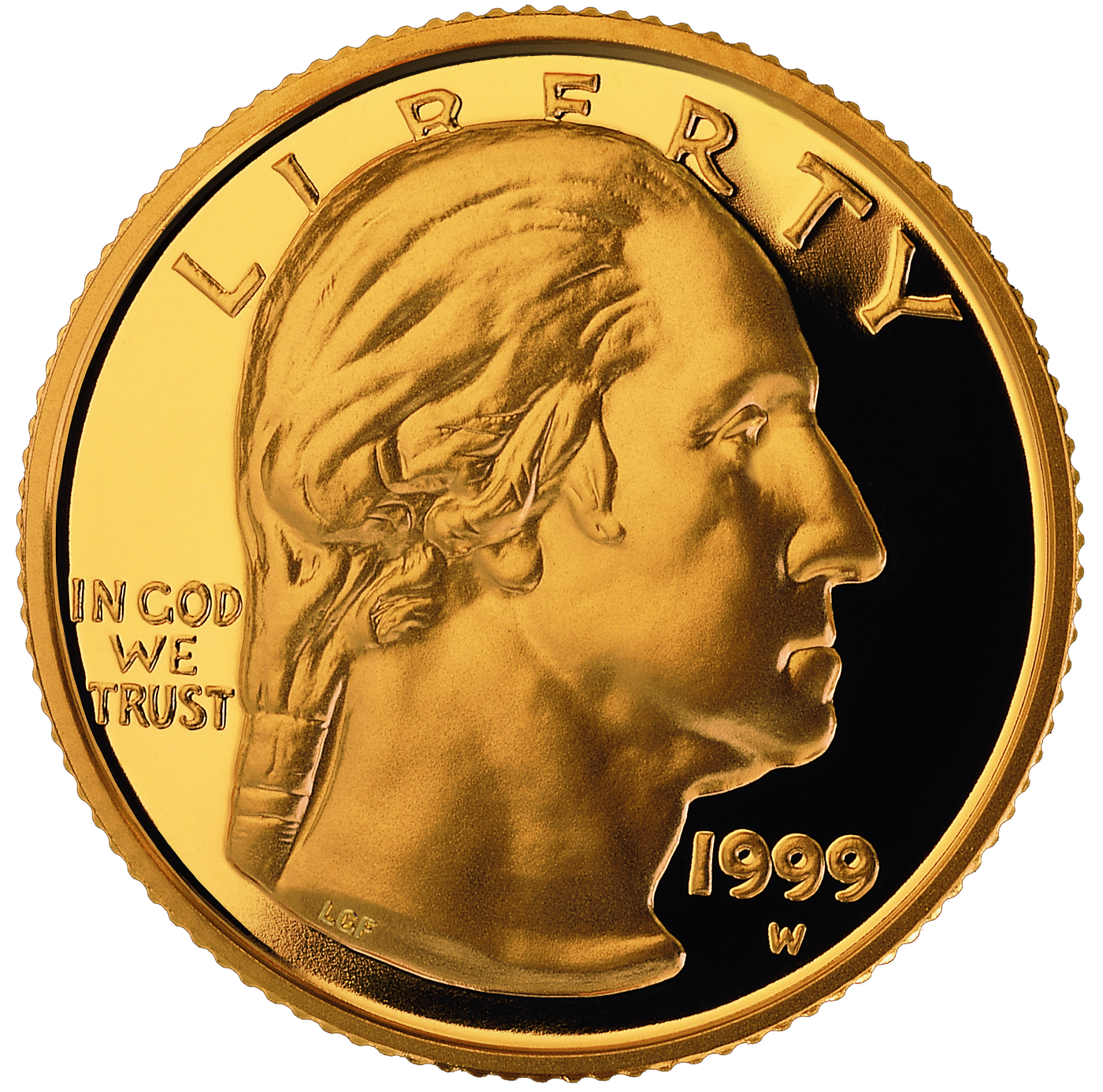
The story behind the coin
George Washington died on December 14, 1799, at his Mount Vernon estate. Two hundred years later, the United States Mint marked the bicentennial of his death with a small gold coin — and, almost by accident, settled a grudge that had been simmering since the 1930s.
Congress authorized the coin in the George Washington Commemorative Coin Act of 1996 (Public Law 104–329). The Mint would strike up to 100,000 gold $5 pieces, sell them at a premium, and route a fixed $35 surcharge from every coin to the Mount Vernon Ladies' Association — the private group that has owned and preserved Washington's home since 1858. The money was meant to bolster the endowment that keeps Mount Vernon standing. A commemorative is, in this sense, a fundraiser with a portrait: you pay above the metal's worth, and the difference does a job.
What makes this coin worth a stranger's attention isn't the anniversary. It's the design — and the woman who waited most of her life to see it struck.