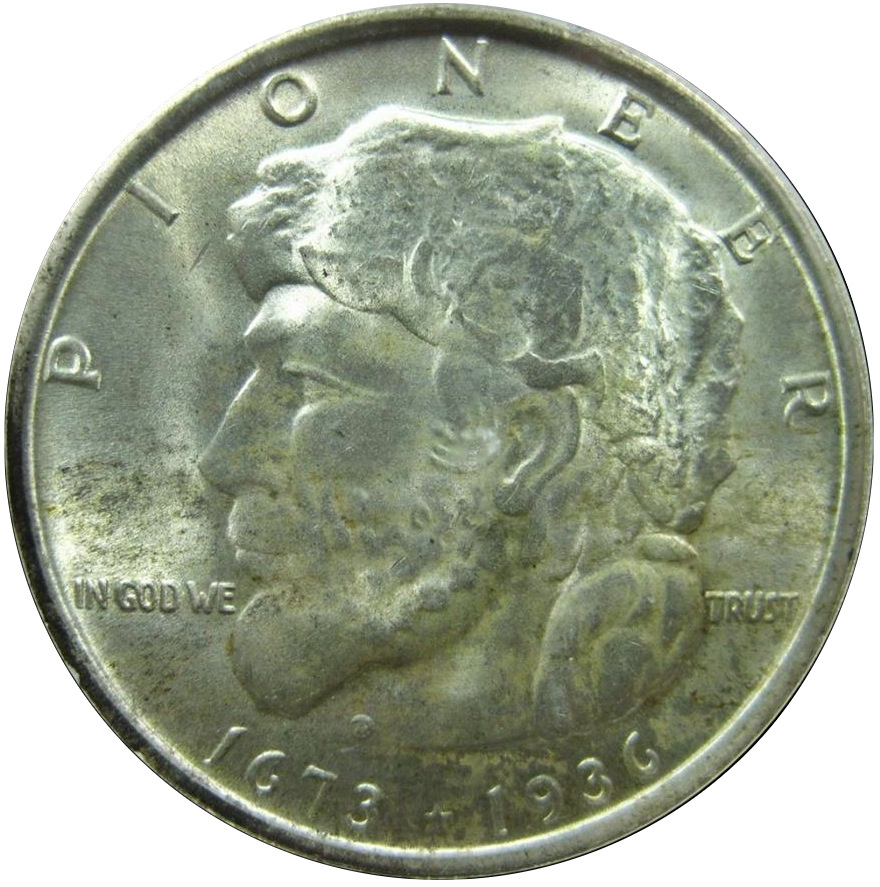
The story behind the coin
Trygve Rovelstad wanted to build a statue. Born in Elgin, Illinois, in 1903 to Norwegian immigrant parents, he had trained under some of the great names of Midwestern sculpture and come home with one ambition: a bronze memorial to the pioneer families who settled the Fox River valley. He laid its foundation in 1934. He had no money to cast it.
So he reached for the same trick that funded dozens of monuments in the 1930s — a commemorative coin. In that era Congress could authorize a special half dollar, hand the whole batch to a sponsoring group at face value (50 cents), and let that group sell them to collectors at a premium. The markup was the fundraiser. Elgin's 100th birthday — the town was founded in 1835 — gave the campaign its hook.
It worked, on paper. President Franklin Roosevelt signed the authorizing act on June 16, 1936, for 25,000 coins. But the money never matched the dream. Rovelstad cleared only a few thousand dollars — enough to keep the project alive, not enough to finish it. The promised government funding never arrived. His Pioneer Memorial stood unfinished for the rest of his life. He died in 1990; the bronze was finally cast and dedicated in Elgin in 2001, more than six decades after the coin that was supposed to pay for it.