The story behind the coin
By the 1830s the U.S. Mint had a problem of identity. Its gold coins still wore a head of Liberty adapted from a design first used on copper cents back in 1808 — fine for a penny, but officials wanted something grander for the nation's gold. They wanted a face that looked like the growing republic felt.
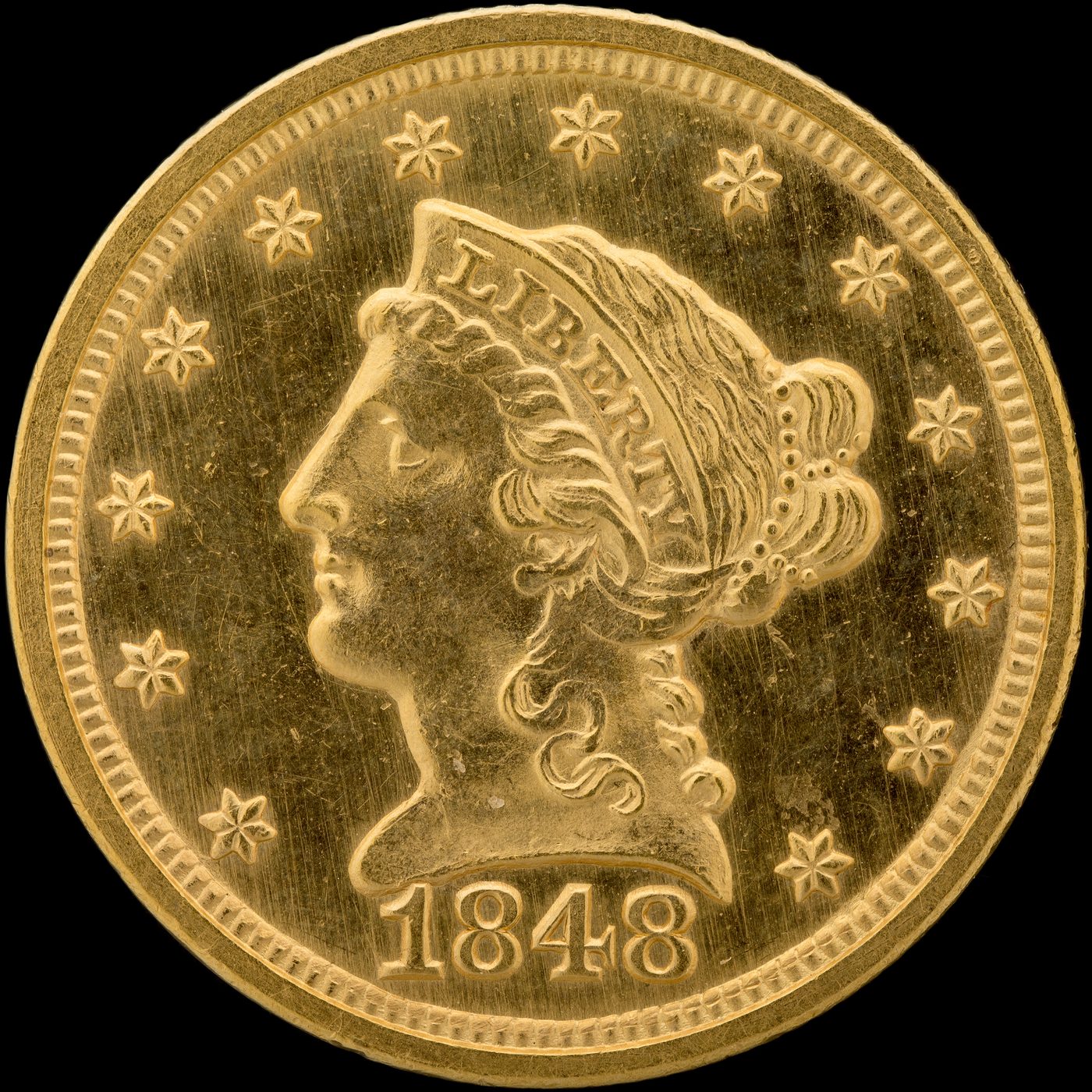
The answer came from Christian Gobrecht, the Mint's chief engraver. His Liberty — a profile crowned with a band reading LIBERTY — first appeared on the larger gold eagle in 1838. In 1840 the Mint shrank it down for the smallest gold coin in the system, the quarter eagle, worth two and a half dollars. The "coronet," the small crown on her head, gave the design its nickname.
What nobody expected was how long it would last. The Coronet quarter eagle was struck every kind of year America had to throw at it — boom, war, reconstruction, and the gilded decades after — from 1840 all the way to 1907. That is 67 years of the same basic design, the longest unbroken run of any coin in U.S. history. It outlived its own designer by more than sixty years.
And it was a working coin of a wild era. The same little gold piece was made at five different mints, including two — Charlotte, North Carolina, and Dahlonega, Georgia — built specifically to turn Southern gold into money before the Civil War shut them down for good. Coins from those two mints alone tell the story of the antebellum South in metal.