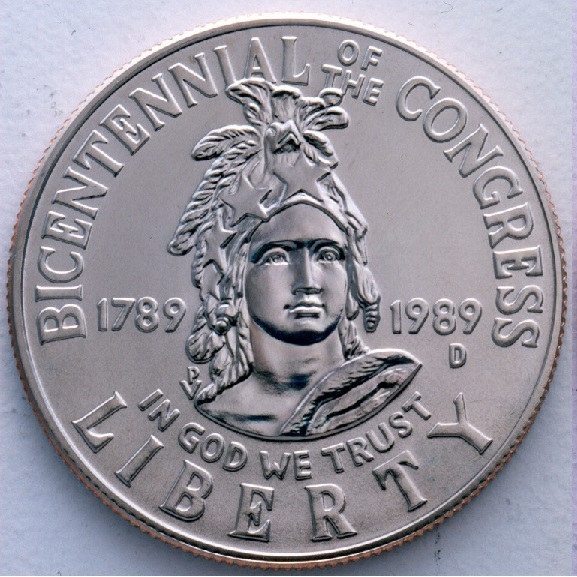
The story behind the coin
On March 4, 1789, the first Congress of the United States was supposed to gather at Federal Hall in New York City. Bad weather and bad roads got in the way, and it took a month to round up enough members to do anything. That ragged start was the beginning of a working national government — the body that would write the Bill of Rights, set up the courts, and decide where to put the capital.
Two hundred years later, Congress voted to celebrate itself. The Bicentennial of the United States Congress Commemorative Coin Act — Public Law 100-673 — authorized three coins: a clad half dollar, a silver dollar, and a gold five-dollar piece. The half dollar is the entry point to that set, and the one most people can actually find.
Here is the quietly clever part. A commemorative coin usually comes with a surcharge — a few dollars on top of the price that go to a cause. Each half dollar carried a one-dollar surcharge, and the money flowed to the Capitol Preservation Fund. So a coin honoring Congress literally helped pay to keep Congress's own building standing. The coin funded the very dome its design depends on.