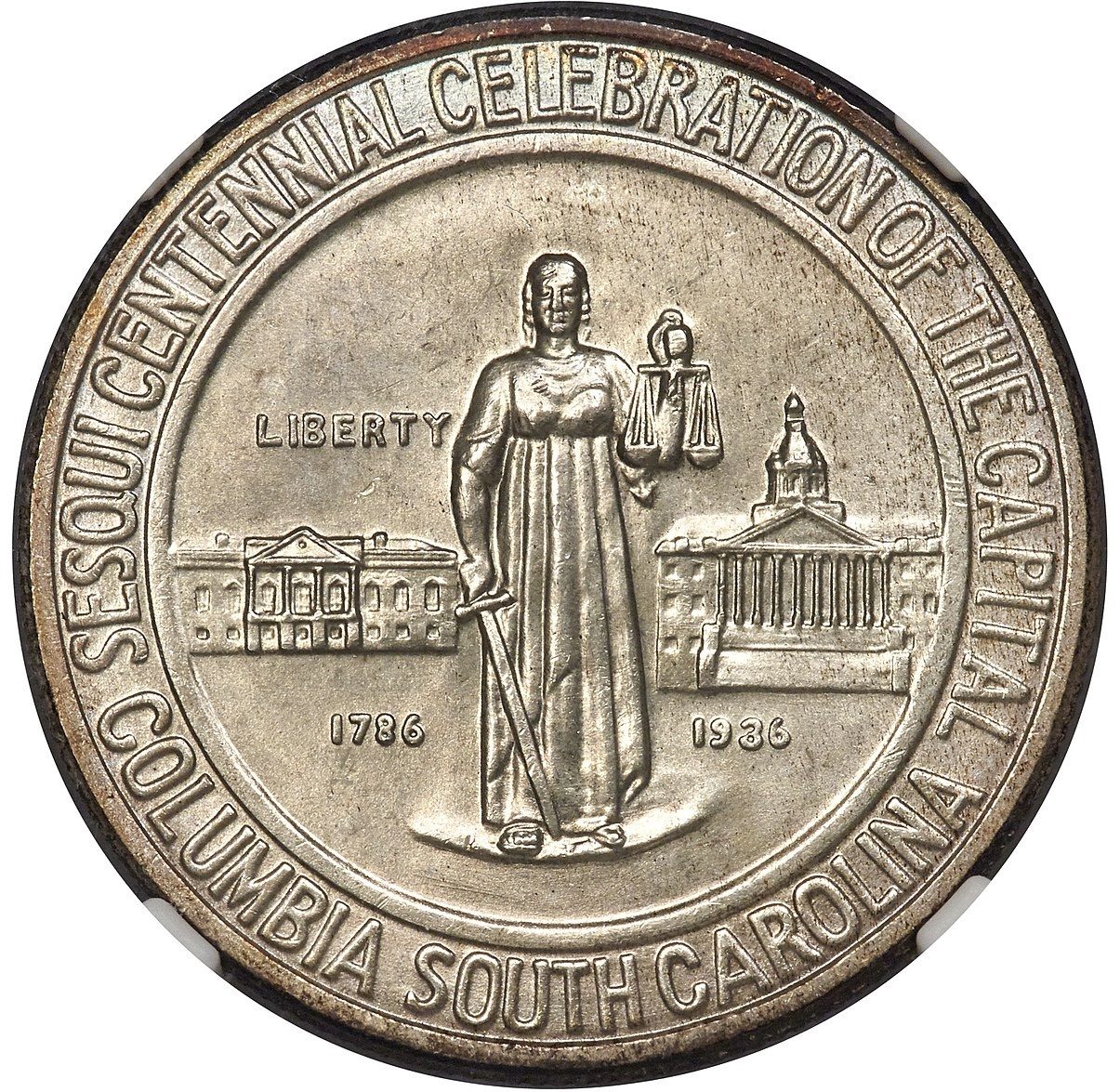
The story behind the coin
Most American cities just happen. Columbia, South Carolina was drawn. In 1786, with the Revolution barely over, the state legislature decided Charleston sat too exposed on the coast and too far from the up-country farmers. So they laid out a brand-new capital on a grid in the middle of the state and named it for Christopher Columbus — one of the first planned capital cities in the country.
A century and a half later, in the depths of the Great Depression, Columbia threw itself a 150th birthday party — its sesquicentennial (that's just the Latin-rooted word for a 150th anniversary). And in the 1930s, the way a proud American town marked a milestone was to lobby Congress for its own commemorative coin.
It worked. On March 18, 1936, an act of Congress authorized up to 25,000 commemorative half dollars for the celebration. The local Sesqui-Centennial Commission would buy them from the Mint at face value and resell them above face — the markup was the whole point, a tidy way to fund the festivities without raising a tax. Dozens of towns and causes were playing this game in 1936, and Congress was waving most of them through.