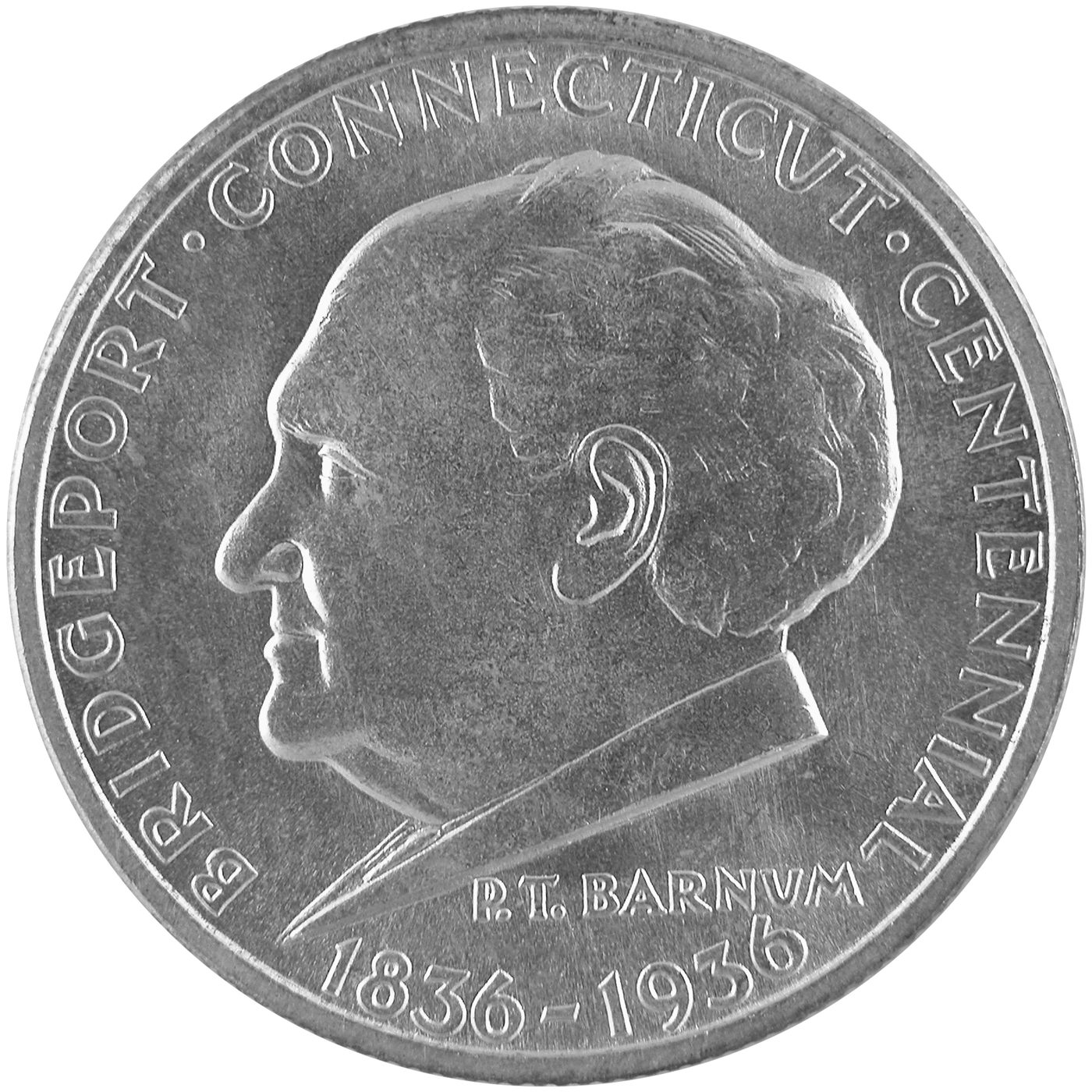
The story behind the coin
In 1836, the harbor town of Bridgeport, Connecticut, became a city. A hundred years later, it wanted a coin to mark the date — and it knew exactly whose face belonged on it.
Phineas Taylor Barnum had made Bridgeport his home. He served as its mayor. He gave the city Seaside Park, helped build its streets and industry, and was buried in its soil. He was also, by then, the most famous American showman who had ever lived — the man behind the circus, the museum of curiosities, the spectacular humbug. Putting Barnum on the coin was an easy call.
The path to a commemorative was the path every town took in the 1930s. A local committee — Bridgeport Centennial, Inc. — lobbied Congress for the right to a special half dollar it could sell to collectors at a markup, with the profit funding the celebration. Senator Augustine Lonergan of Connecticut introduced the bill on March 10, 1936. President Franklin Roosevelt signed it on May 15, 1936, authorizing "not fewer than 25,000 half dollars."
That was the system, and 1936 was its peak. Dozens of cities and causes won their own coins that year, each sold by its own committee. To collectors it became a glut. To Bridgeport it was simply a birthday.