The story behind the coin
For 222 years, every coin the United States made was flat. Then a baseball glove changed that.
In 1939, the National Baseball Hall of Fame and Museum opened its doors in Cooperstown, New York — a small town that had wrapped itself in the legend that baseball was invented there. By 2014, the Hall was turning 75, and Congress marked the anniversary the way it often marks anniversaries: with a commemorative coin. A commemorative is a coin authorized for a specific occasion, sold to the public at a premium rather than spent at face value, with part of the price flowing to a cause.
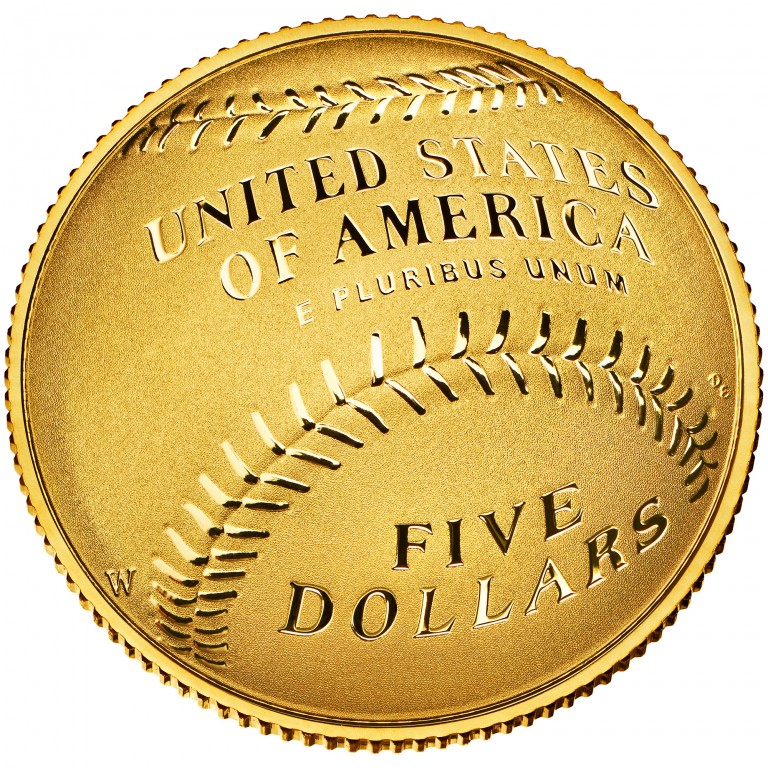
But this one came with an idea no one at the Mint had ever pulled off. The National Baseball Hall of Fame Commemorative Coin Act, signed into law on August 3, 2012, called for a coin that would actually look like a baseball — curved, not flat. The Mint's engineers had to figure out how to strike a domed coin without cracking the metal or smearing the design. They cracked it. The result was the first curved coin in US history.
The $5 gold half eagle is the smallest and scarcest of the three coins in that program. ("Half eagle" is the historic American name for the five-dollar gold piece — the eagle was the ten-dollar coin, so half of one is five dollars.) Its entire run sold out on the first day.