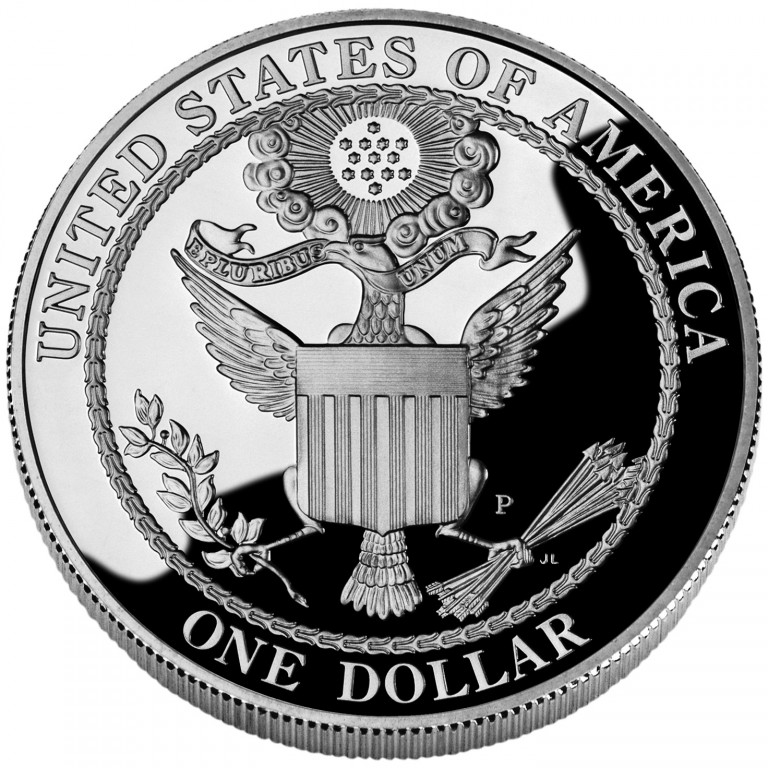
The story behind the coin
The national bird of the United States almost didn't make it.
By the early 1960s, the bald eagle had nearly vanished from the lower 48 states — poisoned by the pesticide DDT, which thinned eggshells until they cracked under the weight of a nesting parent. Counts found only a few hundred breeding pairs left. The bird on the country's Great Seal was disappearing from its own skies.
Then the law stepped in. DDT was banned in 1972, and the Endangered Species Act of 1973 gave the eagle real protection. Slowly, the population climbed back. In 2007 the bald eagle was removed from the threatened-and-endangered list — a rare, full recovery.
The next year, Congress marked the moment with money. The American Bald Eagle Recovery and National Emblem Commemorative Coin Act — Public Law 108-486, signed December 23, 2004 — ordered a three-coin set for 2008: a $5 gold piece, this silver dollar, and a clad half dollar. The timing honored the 35th anniversary of the Endangered Species Act and the bird's return. A surcharge on every coin — $10 on each silver dollar — went to the American Eagle Foundation of Tennessee to fund eagle protection. This was a coin with a job to do.