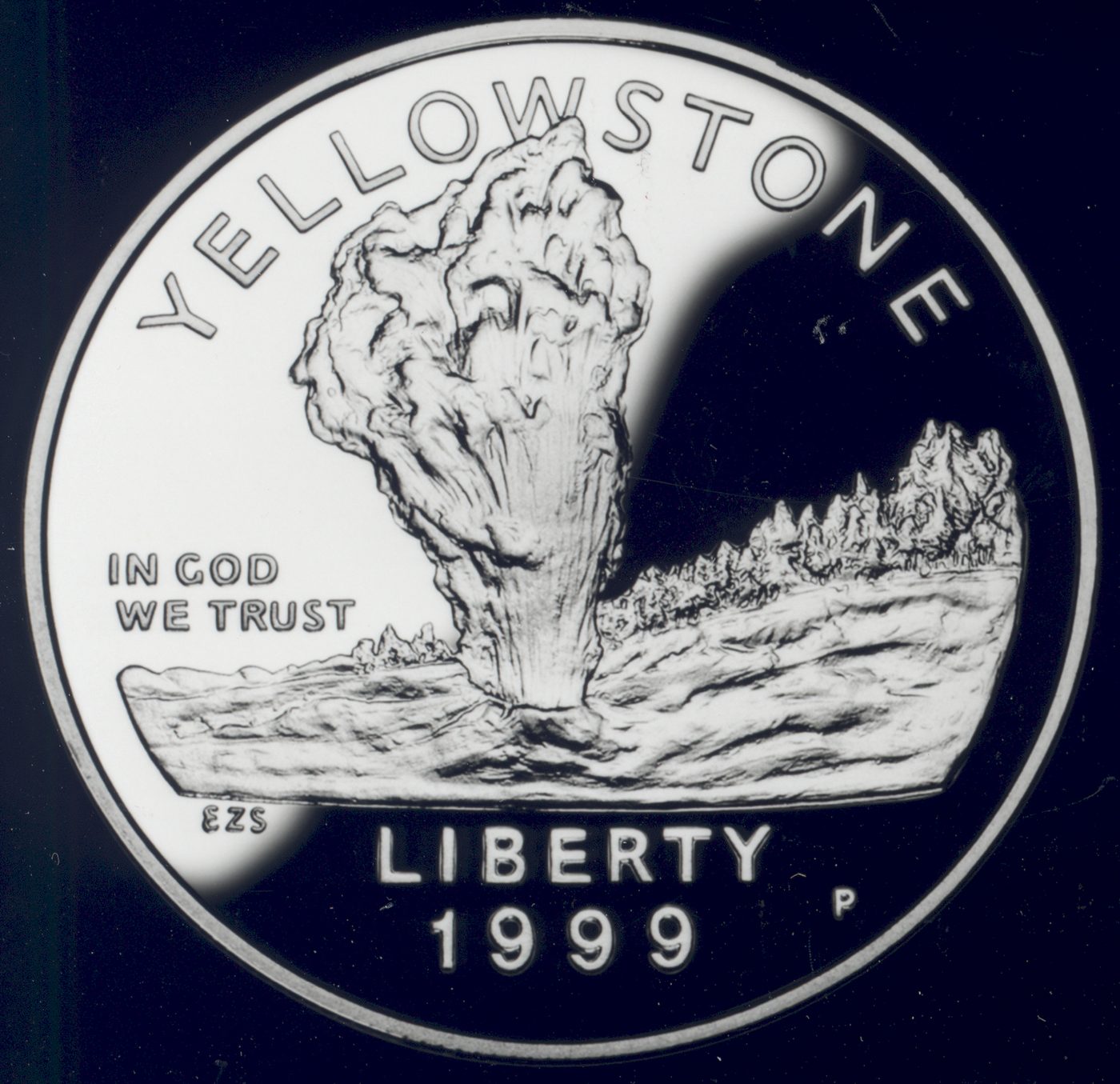
The story behind the coin
On March 1, 1872, President Ulysses S. Grant signed Yellowstone into being — the first national park anywhere in the world. The idea was radical: not a private estate or a royal hunting ground, but land held in trust for the public, forever. Nearly every national park on Earth traces back to that single page of law.
By the late 1990s, Congress wanted to mark the anniversary in metal. The United States Commemorative Coin Act of 1996 — Public Law 104-329 — authorized a silver dollar to honor the park's 125th birthday. (A commemorative coin is a special legal-tender coin struck to mark an event; it isn't made for your pocket, it's made to be kept.)
Here's the honest wrinkle: 1872 plus 125 is 1897 — but the coin is dated 1999. The Mint struck it two years after the actual anniversary. That kind of slippage was common in the busy 1990s commemorative program, where coins were authorized years ahead and queued behind one another. The coin still wears its mission proudly: it celebrates the birth of the national-park idea, even if the candles were lit a little late.
What makes this coin matter isn't rarity — it's purpose. Every coin carried a built-in donation. The Mint added a $10 surcharge to the price of each one, and that money didn't go to the government. Half went to Yellowstone National Park; half went to the National Park Foundation, the official charity for parks across the country. Buying the coin was, quite literally, chipping in for the trails and the bison.