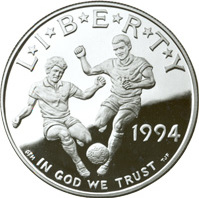
The summer soccer came to America
For one month in 1994, the United States hosted the FIFA World Cup for the first time — and nobody was sure the country would show up. America had no top professional league, no World Cup pedigree, and a reputation, fair or not, as the place soccer went to be ignored.
The country showed up anyway. From June 17 to July 17, 1994, matches filled nine stadiums — the Rose Bowl, Soldier Field, Giants Stadium, the Pontiac Silverdome, and five more. Total attendance reached roughly 3.6 million, still the highest in World Cup history even after the tournament grew from 24 teams to 32. The final, at the Rose Bowl on July 17, drew 94,194 fans and ended with Brazil beating Italy on penalties — the first World Cup final ever decided by a shootout.
The U.S. Mint wanted a piece of that moment. Congress had already cleared the way two years earlier, and on June 14, 1994 — three days before the first whistle — the Mint released a three-coin set to mark the games. The silver dollar was the middle child of that set: bigger than the clad half dollar, cheaper than the $5 gold piece, and the one most buyers actually took home.