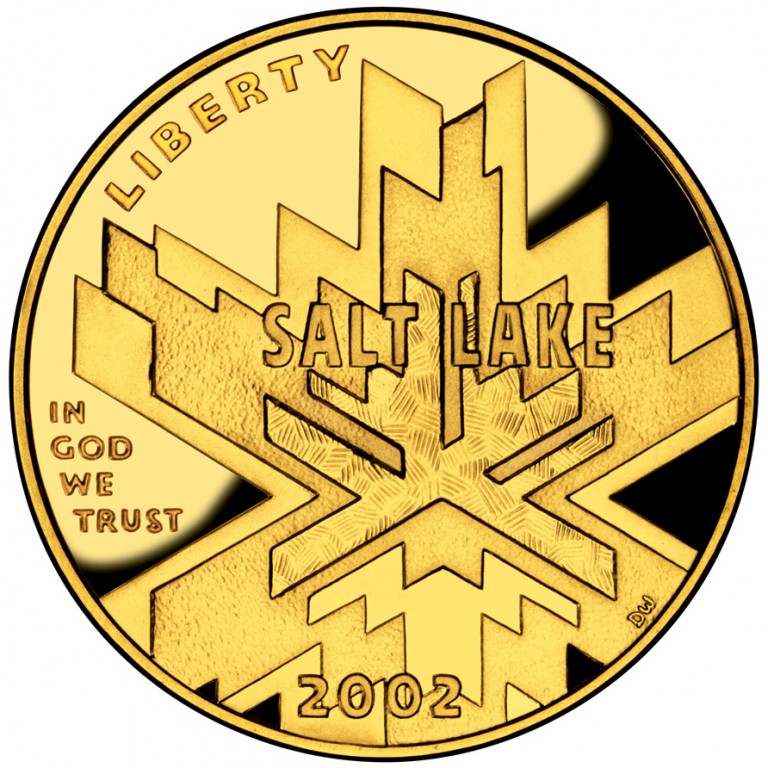
The story behind the coin
In the late 1990s, the Salt Lake City Olympics were in trouble before a single athlete arrived. A bribery scandal over how the city won the Games dominated the news, organizers were replaced, and the whole project needed both money and a fresh start.
A commemorative coin was part of the answer. Congress passed the 2002 Winter Olympic Commemorative Coin Act — Public Law 106-435, signed November 6, 2000 — authorizing two coins to mark the XIX Olympic Winter Games: a silver dollar and this $5 gold piece. Every coin carried a surcharge — an extra amount built into the price that goes to a cause, not to the Mint. The gold coin's surcharge was $35. By law, that money was split evenly between the Salt Lake Organizing Committee, to help stage and promote the Games, and the United States Olympic Committee.
This was the first U.S. Olympic gold coin in six years — the last had been struck for the 1996 Atlanta Games. So when collectors picked one up, they were buying both a small bar of gold and a slice of a Games that, by the time it opened in February 2002, had become a story of recovery rather than disgrace.