The story behind the coin
You already own a small monument to this coin's story. Look at any dime in your pocket. That's Franklin Roosevelt's profile — and he is on the ten-cent piece because of polio.
In 1921, at thirty-nine, Roosevelt caught the disease and never walked unaided again. In 1938 he founded a charity to fight it. The radio star Eddie Cantor coined its nickname on the air, urging Americans to mail their loose change to the White House in "a march of dimes." Millions did. Dime by dime, ordinary people funded the research that produced Jonas Salk's polio vaccine in 1955 — and all but erased a disease that had paralyzed children every summer.
When Roosevelt died in 1945, the Mint put him on the dime within a year. The choice of denomination was no accident: the public had been donating dimes to his cause for years. The coin was a thank-you note from a grateful country.
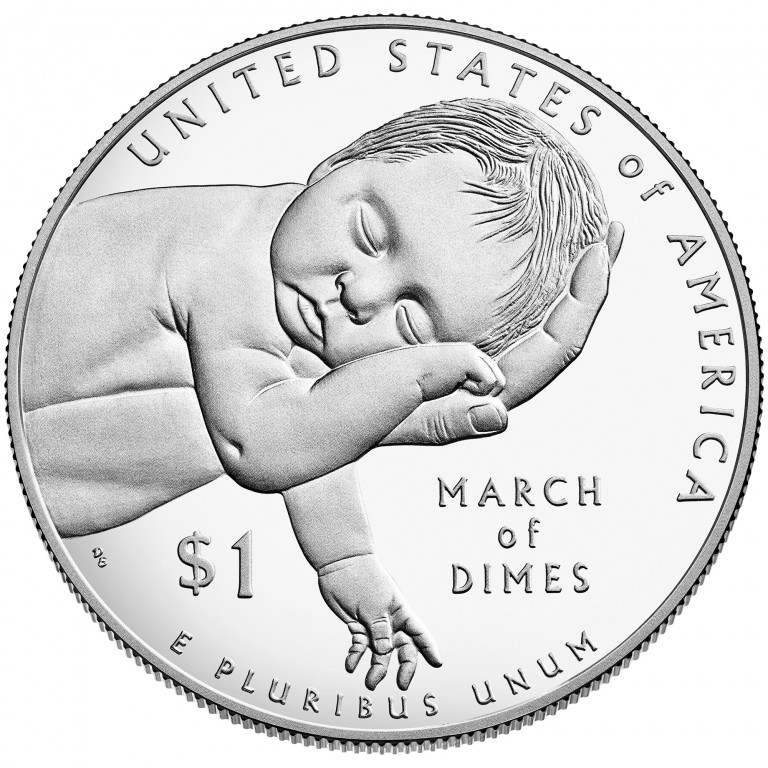
Seventy years later, the March of Dimes — by then refocused on the health of mothers and babies — turned seventy-five. To mark it, Congress authorized a commemorative silver dollar. And the Mint did something quietly perfect: it reunited the two faces of the polio fight. The man the disease struck, and the man who stopped it. The patient and the cure.