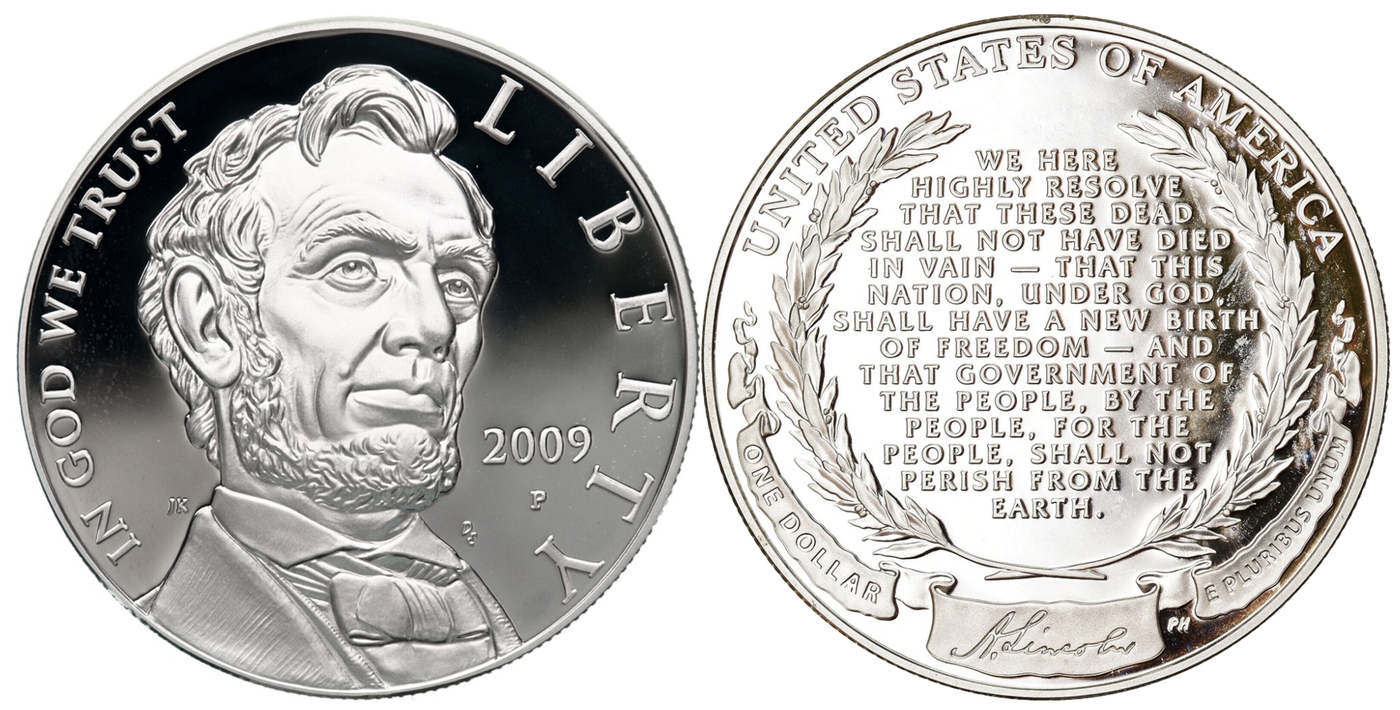
The story behind the coin
On February 12, 2009, lines formed at the U.S. Mint's website. The date was no accident — it was Abraham Lincoln's 200th birthday, two centuries to the day since his birth in a one-room Kentucky cabin in 1809.
Congress had set the stage three years earlier. The Abraham Lincoln Commemorative Coin Act (Public Law 109-285), signed September 27, 2006, ordered a single silver dollar to mark the bicentennial — and capped it hard at 500,000 coins, across every version the Mint cared to sell.
That cap turned out to matter. Most modern commemoratives never come close to their limits; the Mint quietly melts the leftovers. This one was different. The public bought all 500,000. It is one of the few modern U.S. commemoratives to completely sell out — the run didn't trickle to an end, it hit a wall.
Why the frenzy? Part of it was Lincoln. Part of it was timing — 2009 was a Lincoln year across the board, with four new cent designs marking the same bicentennial. And part of it was the coin itself, which did something American silver dollars almost never do.