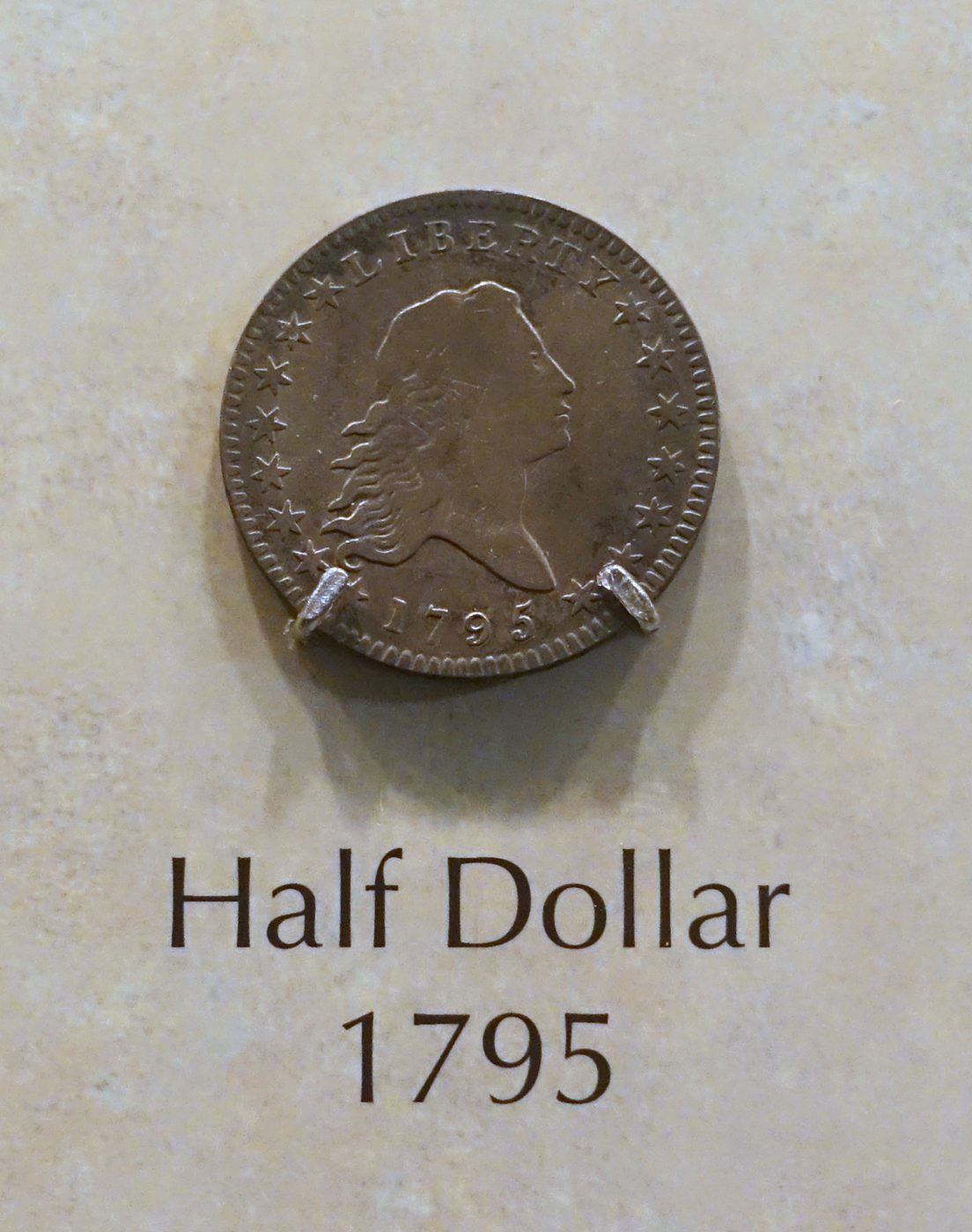
The story behind the coin
For its first eighteen years, the United States had no money of its own. People paid for things with Spanish dollars, British shillings, and a jumble of foreign silver that nobody fully trusted. The Coinage Act of 1792 was meant to fix that — it created the Mint, set the dollar as the unit, and authorized the country to strike its own silver and gold instead of borrowing the world's.
Doing it turned out to be harder than passing the law. The Mint needed its officers to post surety bonds before it could legally handle precious metal, and those bonds weren't in place until 1794. Only then could silver coinage begin. The half dollar was among the very first to roll off the presses — the first fifty-cent piece the nation ever made.
It began as a trickle. The first delivery in late 1794 was just 5,300 coins, struck on rudimentary presses by hand. The Mint dated dies by the year they were cut, not the year they were used, so an additional 18,164 pieces struck in early 1795 still carried the 1794 date — bringing the first-year total to 23,464. The next year the Mint found its footing and struck roughly 300,000 more. Two years later the design was gone, replaced by the Draped Bust. That short run is exactly what makes it a prize.