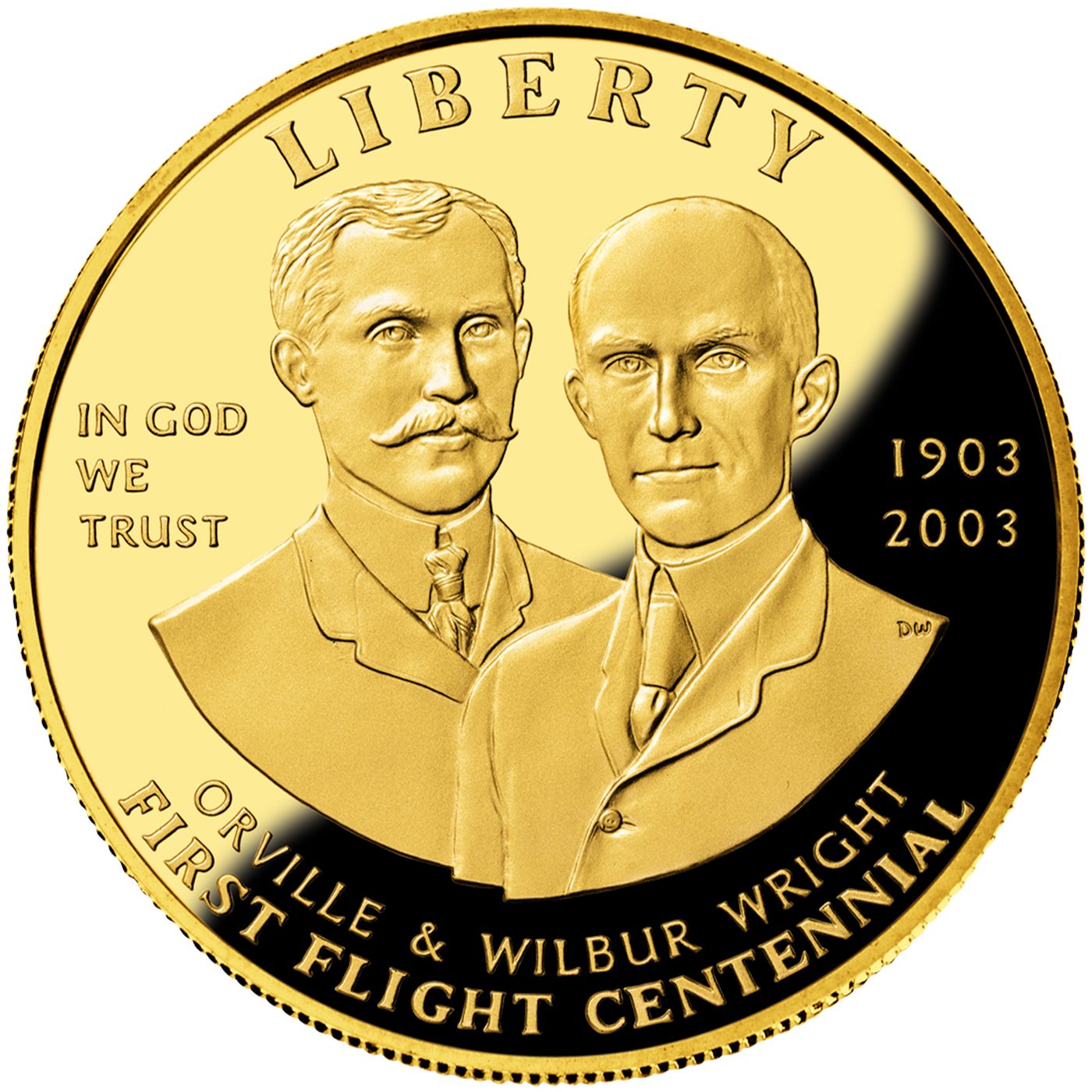
The story behind the coin
On December 17, 1903, on a windswept stretch of sand near Kitty Hawk, North Carolina, Orville Wright lay flat on the lower wing of a flimsy machine of wood, wire, and cloth and held on for twelve seconds. He covered 120 feet. Four flights later that morning, his brother Wilbur stayed up for 59 seconds. Powered, controlled, heavier-than-air flight had just been invented — by two brothers who fixed bicycles for a living.
A hundred years later, Congress decided that anniversary deserved gold. The First Flight Centennial program, authorized under Public Law 105-124, gave the Mint three coins: a clad half dollar, a silver dollar, and — at the top of the set — a $10 gold eagle.
The gold piece carried a $35 surcharge on every sale. That money was earmarked for the First Flight Centennial Foundation, to help maintain the Wright Brothers National Memorial at Kill Devil Hills and expand the visitor facilities at the spot where it all happened. Buy the coin, and a little of your money went back to the dunes.