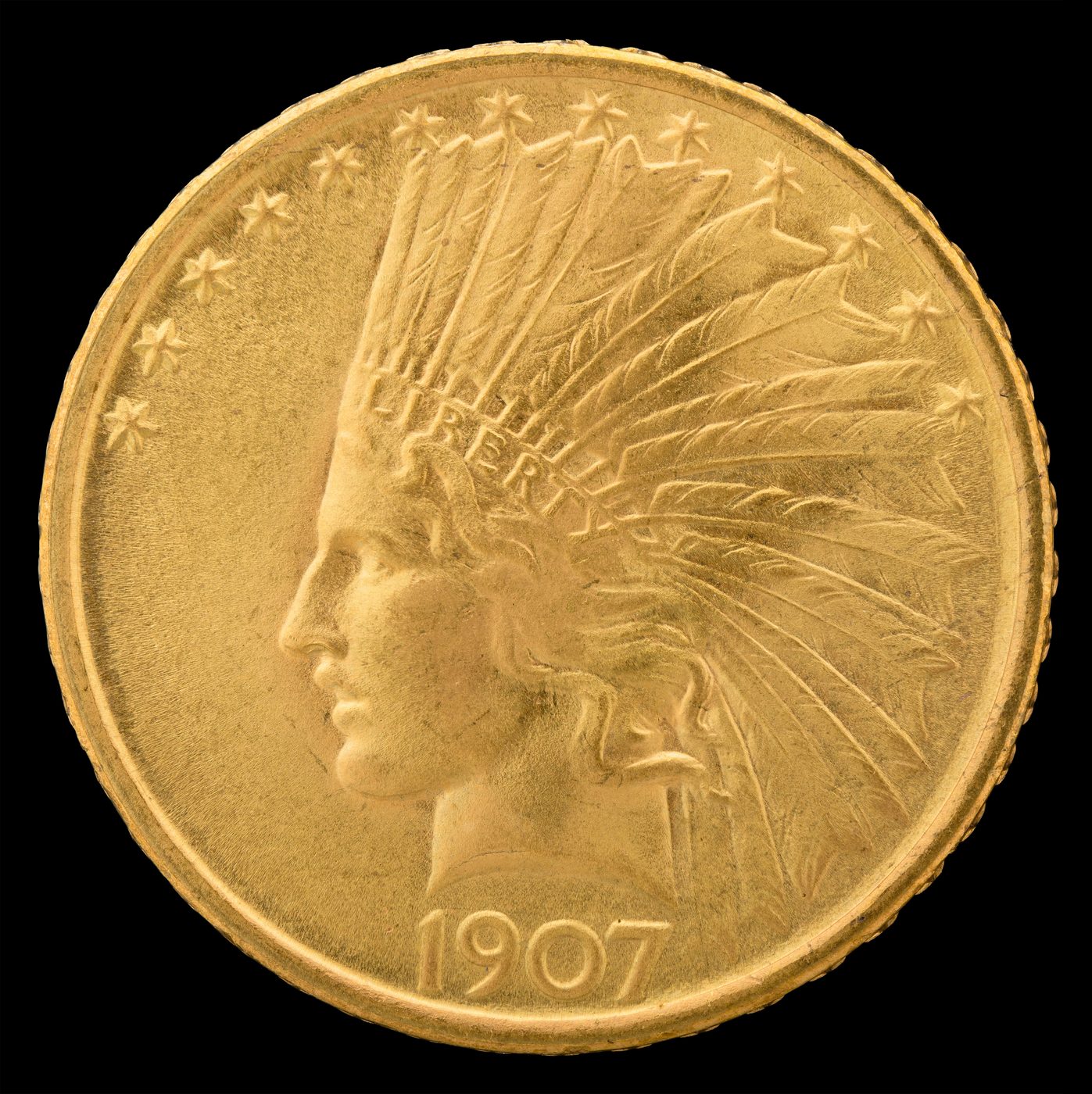
The story behind the coin
"Eagle" was not a nickname. When Congress wrote the Coinage Act of 1792, it named the new ten-dollar gold piece the Eagle outright — and made it the yardstick for the whole gold family. The quarter eagle was $2.50, the half eagle $5, the double eagle $20. The Eagle was the unit they all answered to.
The Eagle nearly didn't survive its first decades. After 1804 the Mint stopped striking it — the gold in a $10 coin was worth more than $10, so the coins sailed overseas to be melted. For thirty-four years there was no Eagle at all. It came back in 1838, and from then on its story runs in three distinct lives, separated by the day America walked away from gold and the day it came back.
That middle break is the drama. On April 5, 1933, in the depths of the Depression, Executive Order 6102 ordered Americans to turn in their gold coins. The Mint had already struck 1933-dated Eagles — but almost the entire run was melted into bars before it could circulate. The coin existed and then, by order of the government, mostly ceased to. Fewer than forty 1933 Eagles are thought to survive. Unlike the infamous 1933 double eagle, these were legally released, so collectors can actually own one — if they can find it.