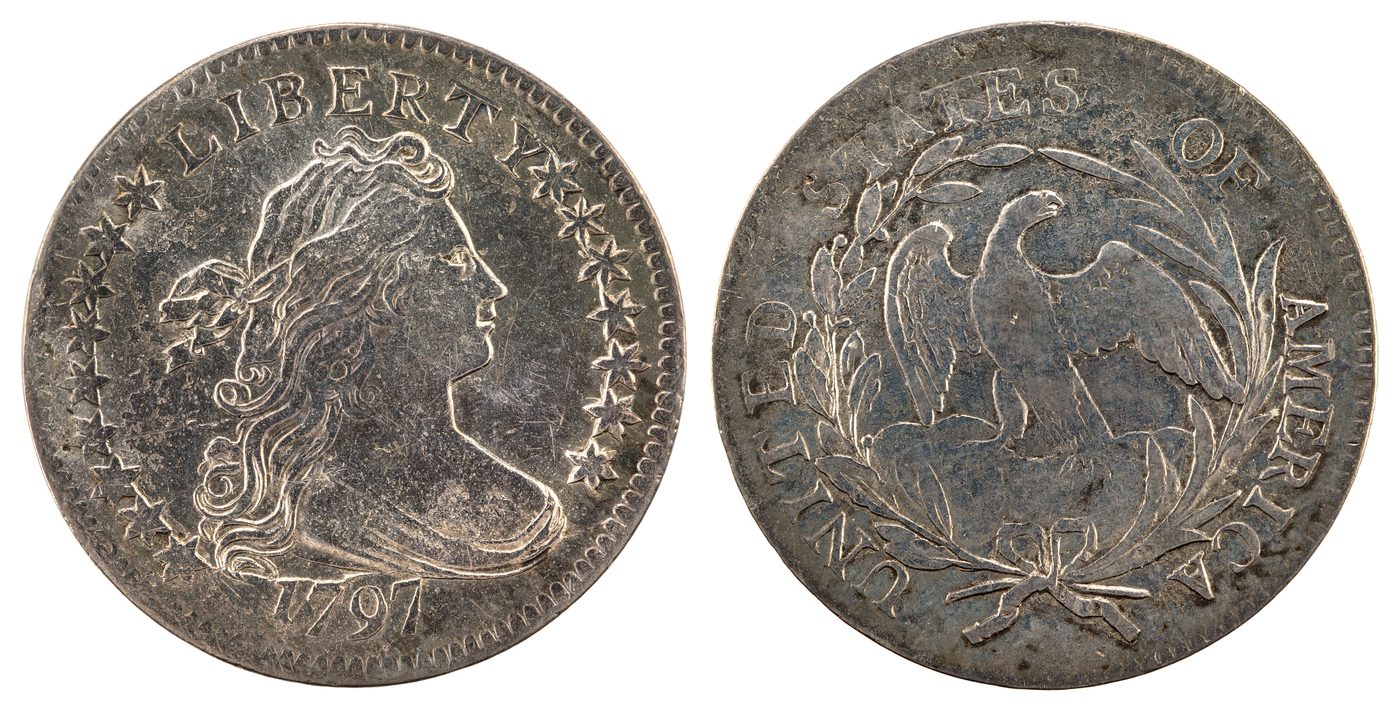
The story behind the coin
In 1796 the United States Mint was three years old and still learning to make coins. It had no steam power, no mechanized presses worth the name — just hand-cut dies and screw presses muscled by men. That year, for the first time, it struck a dime.
The coin came out of a simple need. The Coinage Act of 1792 had laid out a decimal money system — dollars, dimes, cents — to replace the chaos of Spanish, British, and French coins that Americans actually used day to day. A "disme" (the old spelling, from the French for tenth) was meant to be one-tenth of a dollar. But the Mint struggled to produce silver coins at all in its first years, and the dime had to wait until 1796 for its debut.
Here is the strange part. The 1792 law required a mark of value only on the copper coins — the cent and half cent. So the silver dime carried no denomination at all. No "10 C.," no "ONE DIME." A person was simply expected to know that this small silver coin, smaller than a cent, was worth ten of them. It's a window into how new and improvised the whole system still was.
The Draped Bust dime was struck only through 1807, and not even every year — there are no dimes dated 1799 or 1806. The Mint coined silver to order, turning bullion that depositors brought in into whatever denominations were wanted. In some years, nobody wanted dimes.