Designer

James B. Longacre — the engraver they tried to fire for 25 years

A self-taught portraitist who put his stamp on American gold, silver, and nickel — over the loud objections of the men he worked for.

James B. Longacre — the engraver they tried to fire for 25 years
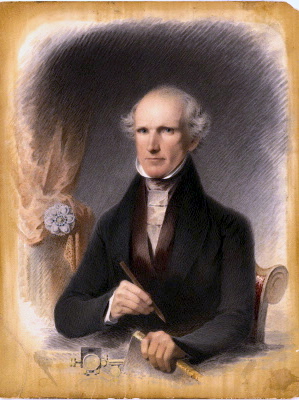
Self-portrait by James B. Longacre (1794–1869), c. 1845 · public domain · source

When James B. Longacre took the top engraving job at the U.S. Mint in 1844, the men already there decided he had to go. He stayed for the rest of his life — and the coins he made in those years are still in collectors' hands today.

Who he was

James Barton Longacre was born on a Pennsylvania farm in 1794 and ran away from it at twelve. His mother had died young; he could not get along with his stepmother, so he walked to Philadelphia and apprenticed himself to a bookseller. That should have been the end of the story — a farm boy filing books in a city shop.

But he could draw. By 1813 his employer released him to learn engraving instead, and Longacre trained under George Murray, one of the best banknote engravers in the country. Banknote work is exacting: every line is cut by hand into metal, in reverse, with no margin for a slip. It taught him a portraitist's eye and a craftsman's patience.

He went out on his own in 1819 and made his name not on coins but on paper. He engraved portraits of the Founders for John Binns' famous broadside of the Declaration of Independence. In the 1830s he and the New York artist James Herring published the National Portrait Gallery of Distinguished Americans — volumes of engraved portraits of the men who had built the young republic. By 1844, Longacre was one of the most respected portrait engravers in the United States.

Then the U.S. Mint's chief engraver, Christian Gobrecht, died. Longacre wanted the job, and a powerful friend — Senator John C. Calhoun of South Carolina — helped him get it. President John Tyler appointed him the fourth Chief Engraver of the United States Mint in September 1844. He had almost no experience cutting coin dies. That gap, and the politics behind his hiring, would haunt him for years.

The fight that defined his career

Longacre walked into a Mint that did not want him. Two men ran the place day to day: Director Robert Maskell Patterson and Chief Coiner Franklin Peale. Both resented the political muscle that had won Longacre his post — and Peale had a private reason. He ran a profitable medal business on the side, using Mint machinery and Mint labor. A working chief engraver with his own ideas threatened that racket.

So they tried to push him out. They questioned his competence, blocked his access to equipment, and at one point Patterson pressed to hand Longacre's design work to an outside engraver — a path that would have made the chief engraver's job pointless. Twice in 1849 and 1850, Patterson moved to have Longacre removed. Longacre fought back the only way he could: he went over their heads, to the Treasury Secretary, and made his case directly. He kept his job. Peale was eventually fired in 1854 once the scale of his private dealing became clear.

The crucible of all this was the gold double eagle — the new twenty-dollar coin authorized in 1849 to soak up California gold-rush bullion. Longacre had to produce three different obverses (the obverse is the "heads" side) before a single 1849-dated pattern could be struck. When he tried to finish the reverse, his plaster model and the electrotype made from it were both destroyed in the transfer process — a failure Longacre believed was Peale's sabotage. He had kept a backup of his plaster, and rebuilt the work by his own hand. The Library Company of Philadelphia, which holds the Longacre family papers, records that he completed the double eagle "to the detriment of his health."

That experience set the pattern for his style. Longacre worked alone, by hand, on coins of high relief — the design standing up boldly from the surface. It is what gives his work its richness, and it is also what got him in trouble again and again. Beautiful relief is hard to strike: the press can't always push metal into the deepest parts of the die, and dies crack under the strain. His gold dollar and Shield nickel both had to be redesigned for exactly this reason. The art kept colliding with the machine.

His other signature was American symbolism. He built a "cereal wreath" of wheat, corn, cotton, and tobacco — crops of North and South — for the reverses of his gold coins, and reused it for decades. Later engravers, from George Morgan to Augustus Saint-Gaudens, drew on the vocabulary Longacre helped establish.

Career timeline

  1. 1794Born August 11 on a farm in Delaware County, Pennsylvania.
  2. 1806Leaves home at twelve; apprentices to a Philadelphia bookseller.
  3. 1813Switches to engraving, training under George Murray.
  4. 1819Opens his own engraving shop; engraves Founders' portraits for Binns' Declaration of Independence broadside.
  5. 1830sCo-publishes the National Portrait Gallery of Distinguished Americans with James Herring.
  6. 1844Appointed fourth Chief Engraver of the U.S. Mint by President Tyler (September 16).
  7. 1849–1850Designs the Liberty Head double eagle and gold dollar amid a campaign to oust him.
  8. 1854Type 2 'Indian Princess' gold dollar and the three-dollar gold piece debut; striking problems plague the gold dollar.
  9. 1856–1858Designs the Flying Eagle cent.
  10. 1859Indian Head cent enters circulation.
  11. 1864Two-cent piece — first U.S. coin to carry 'In God We Trust' — is released.
  12. 1866Shield nickel introduced, with rays on the reverse.
  13. 1867Rays removed mid-year to ease striking and extend die life.
  14. 1869Dies January 1 in Philadelphia, still Chief Engraver after 24 years.

Key facts

Born
August 11, 1794 — Delaware County, Pennsylvania
Died
January 1, 1869 — Philadelphia, Pennsylvania
Nationality
American
Role
Fourth Chief Engraver, U.S. Mint (1844–1869)
Trained under
George Murray (Murray, Draper, Fairman & Co.), banknote engraving
Signature works
Liberty Head double eagle; gold dollar; Shield nickel; Indian Head cent; Flying Eagle cent; two-cent piece
Style
High-relief, hand-cut designs rich in American agricultural symbolism

Questions collectors ask

What coins did James B. Longacre design?

A remarkable range. In gold: the Liberty Head double eagle ($20), the gold dollar (all types), and the three-dollar piece. In smaller money: the Flying Eagle cent, the Indian Head cent, the two-cent piece, the silver and nickel three-cent pieces, and the Shield nickel. He also engraved the reverse design used on later Seated Liberty dimes and half dimes.

Why did the Mint try to fire James Longacre?

He was hired through political connections and had little experience cutting coin dies, which gave Mint Director Robert Patterson and Chief Coiner Franklin Peale grounds to question him. Peale also ran a private medal business on Mint equipment and saw an active chief engraver as a threat. They tried more than once to remove him or hand his work to an outside engraver. Longacre appealed directly to the Treasury and kept his job; Peale was dismissed in 1854.

Did Longacre's daughter model for the Indian Head cent?

It's a charming story — and almost certainly a myth. Longacre himself rejected it, and Mint Director James Ross Snowden confirmed in 1858 that the design was not based on anyone in the Longacre family. The Indian Princess head he favored was an artistic motif, not a portrait of his daughter Sarah.

Why are some of his designs so hard to find well struck?

Longacre worked in high relief, where the design stands tall off the coin. That's beautiful but punishing to strike: the press can't always fill the deepest parts of the die. The Type 2 gold dollar (1854–1856) and the early Shield nickel are notorious for weak strikes, and both were redesigned to fix the problem — which is exactly why sharp, fully struck examples command a premium.

Why were the rays removed from the Shield nickel in 1867?

The first Shield nickels (1866 and early 1867) had rays between the stars on the reverse. The hard copper-nickel alloy and the busy design wore out dies fast and struck poorly, so partway through 1867 the Mint removed the rays. Both the 1866 With Rays and the 1867 With Rays are collected as distinct, scarcer types.

Sources