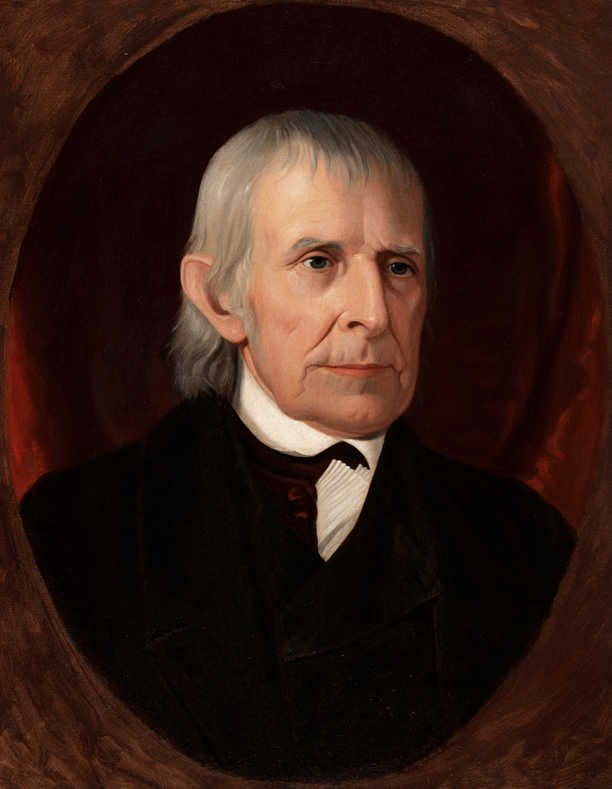
Who he was
In the summer of 1792, the United States had a constitution, a president, and almost no coins of its own. It also had no mint building — just a half-finished structure on Seventh Street in Philadelphia and a deadline. To make money, the new nation needed machinery, and to make machinery it needed a mechanic. It found one a few blocks away.
Adam Eckfeldt was born in Philadelphia on June 15, 1769, the son of a German immigrant who ran a large smithy making edge-tools and implements. He grew up in his father's workshop, learning ironwork and machinery — exactly the skills a brand-new mint would need. His father had even tinkered with early American coinage himself, so the trade was practically in the family before the Mint existed.
So when the Mint went looking for someone to build a screw press — the heavy, hand-cranked machine that stamps a design into a metal blank — Eckfeldt got the work. He built that first press in 1792, supplied scales and a lathe, and the next year added a device to feed coin blanks into the press automatically. He was, at first, a contractor: paid by the job, not on staff.
He joined the payroll in 1795 and was appointed assistant coiner on January 1, 1796 — a post President Washington signed off on. He held it for eighteen years. Then, in 1814, on the death of his predecessor, he became the Mint's second chief coiner, the official responsible for actually turning approved designs into struck coins. He kept that job for twenty-five years. And here is the remarkable part: after he retired in 1839, he kept showing up and doing the work anyway, unpaid, until he died in 1852. His own family said the Mint barely knew how to replace him.