Designer
Brenda Putnam
The sculptor who mapped the Great Lakes onto a half dollar
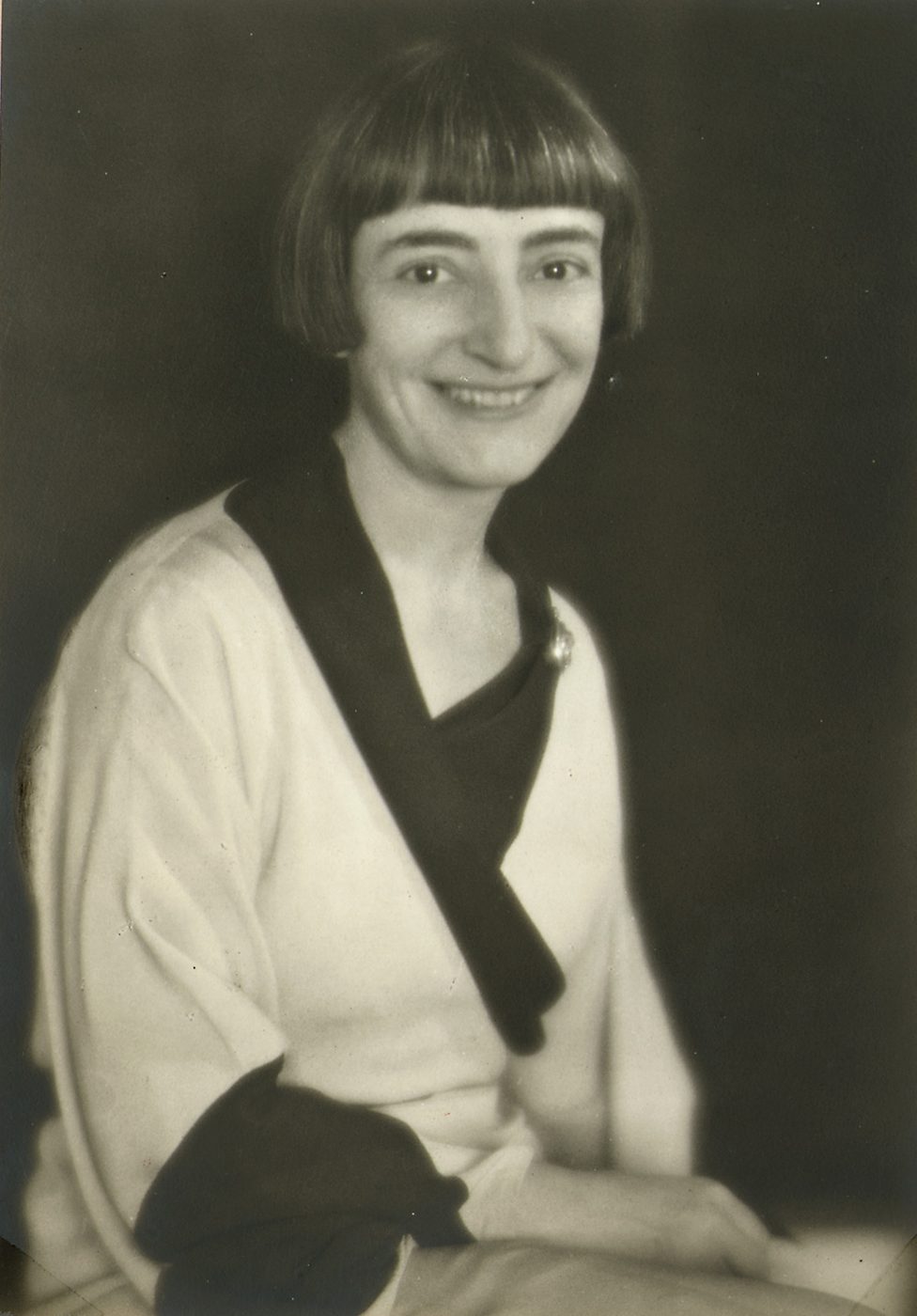
She is remembered for a grinning marble Puck outside a library in Washington, and for a book that taught a generation how to sculpt. But Brenda Putnam also drew the lakes, the stars, and the surveyor's compass that turned an Ohio coin into a tiny map of the Midwest.
Who she was
Brenda Putnam was born into America's books. Her father, Herbert Putnam, ran the Library of Congress for forty years. Her grandfather founded the publishing house G. P. Putnam's Sons. She grew up among words — and chose, instead, to work in marble, bronze, and clay.
Born in Minneapolis on June 3, 1890, she trained early and seriously. As a teenager she studied at the Museum School in Boston under Bela Pratt — himself a coin designer — then spent three years at the Art Students League of New York under James Earle Fraser, the sculptor of the Buffalo nickel. By 1910, at twenty, she had her own studio in New York City.
She was a musician, too — a trained pianist who toured in a chamber trio. That ear shows in her early work: sensitive bronze busts of the great performers she knew, from cellist Pablo Casals to the harpsichordist Wanda Landowska. For years she shared a Manhattan studio with the sculptor Anna Hyatt Huntington, part of a remarkable circle of American women carving their way into a field that had largely belonged to men.
The craft
Putnam's early style was tender and realistic — children, garden figures, fountain sprites, the kind of work that filled the formal gardens of the era. Then, in 1927, she went to Italy. Studying under Libero Andreotti, she came back reaching for something cleaner and more modern, the flattened planes and quiet geometry we now call Art Deco.
Her masterpiece in that mode is Puck — the impish Shakespeare sprite, carved in marble in 1932, that still laughs from a fountain beside the Folger Shakespeare Library in Washington. Beneath him she set the line "What fooles these mortals be." Putnam knew her materials cold: she argued the architects out of a "streaky and brittle" Georgia marble and into a more durable Alabama stone — and she was proved right when the figure weathered cleanly for decades.
What may be her most lasting legacy isn't a statue at all. In 1939 she published The Sculptor's Way, a clear, generous guide to modeling and carving that stayed in print into the 21st century and taught countless students how the work is actually done. She taught in person for thirty years; her students included a who's who of mid-century American sculptors. When she turned to coinage, then, she brought a working sculptor's instinct for relief — the shallow, raised modeling a coin allows — and for fitting a story into a circle barely larger than an inch across.
The coin
Cleveland turned a hundred years old as a city in 1936, the same summer it hosted the Great Lakes Exposition — a world's-fair-style spectacle on the lakefront. To mark both, Congress authorized a commemorative half dollar, and Brenda Putnam was hired to design it.
The obverse — the heads side — carries a bust of Moses Cleaveland, the Connecticut surveyor whose company laid out the city in 1796. (The legend spells his name with that extra "a"; the man kept it, the city dropped it.) With no photograph to work from, Putnam modeled the portrait on the single known painting of him.
The reverse is the clever part. Putnam drew a top-down map of the Great Lakes and scattered nine stars across it, one for each major lake city — Duluth, Milwaukee, Chicago, Toledo, Detroit, Cleveland, Toronto, Buffalo, Rochester. Cleveland gets the largest star, pinned by the point of a surveyor's compass — a quiet nod to Cleaveland's own trade. It is one of the most graphic, map-like designs in the entire U.S. commemorative series, and it reads instantly even at coin scale.
Key facts
- Born
- June 3, 1890, Minneapolis, Minnesota
- Died
- October 18, 1975, Concord, New Hampshire
- Nationality
- American
- Trained under
- Bela Pratt, James Earle Fraser, Libero Andreotti
- Coin design
- Cleveland Centennial / Great Lakes Exposition half dollar (1936)
- Best-known sculpture
- Puck (1932), Folger Shakespeare Library, Washington, D.C.
- Notable book
- The Sculptor's Way (1939)
- Academy
- Academician, National Academy of Design (1936)
Career milestones
- 1890Born in Minneapolis, daughter of Librarian of Congress Herbert Putnam.
- 1910Opens her own sculpture studio in New York City at age 20.
- 1922Wins the Barnett Prize at the National Academy of Design for her Sea Horse Sundial.
- 1927Studies in Italy under Libero Andreotti, turning toward a modern, Art Deco style.
- 1932Completes the marble Puck for the Folger Shakespeare Library.
- 1936Designs the Cleveland Centennial half dollar; elected academician of the National Academy of Design.
- 1939Publishes The Sculptor's Way, a guide that stays in print for decades.
- 1945–46Designs the Admiral Ernest J. King Congressional Gold Medal.
- 1952Completes a bust of Susan B. Anthony, her last sculpture.
- 1975Dies in Concord, New Hampshire, at 85.
Questions collectors ask
Who designed the 1936 Cleveland Centennial half dollar?
Sculptor Brenda Putnam (1890–1975). She trained under Bela Pratt and James Earle Fraser — the designer of the Buffalo nickel — and was already well known for the marble Puck at the Folger Shakespeare Library before she took the coin commission. Her initials, BP, sit just beneath the portrait on the coin.
Why is Moses Cleaveland's name on the coin spelled differently from the city?
Because the man and the city diverged. The surveyor who laid out the settlement in 1796 spelled his name 'Cleaveland,' with the extra 'a' — and that is how it appears on Putnam's coin. The city later dropped the 'a' to become 'Cleveland.' The coin preserves the older, original spelling.
What do the stars on the reverse mean?
Each star marks a major Great Lakes city — nine in all, from Duluth in the west to Rochester in the east. Cleveland gets the largest star, fixed by the point of a surveyor's compass, a tribute to Moses Cleaveland's own profession. Putnam laid them over a top-down map of the lakes, making the reverse read almost like a chart.
Is Brenda Putnam famous for anything besides the coin?
Very much so. Her best-loved work is the laughing marble Puck (1932) at the Folger Shakespeare Library in Washington, D.C. She also wrote The Sculptor's Way (1939), a classic teaching manual that stayed in print for decades, and she sculpted portrait busts of figures from Pablo Casals to Susan B. Anthony.