Designer

Adam Eckfeldt: the man who built the press, then ran it for fifty years

A Philadelphia blacksmith's son who helped strike the very first U.S. coins — and quietly saved the ones that became a national treasure.

Adam Eckfeldt: the man who built the press, then ran it for fifty years
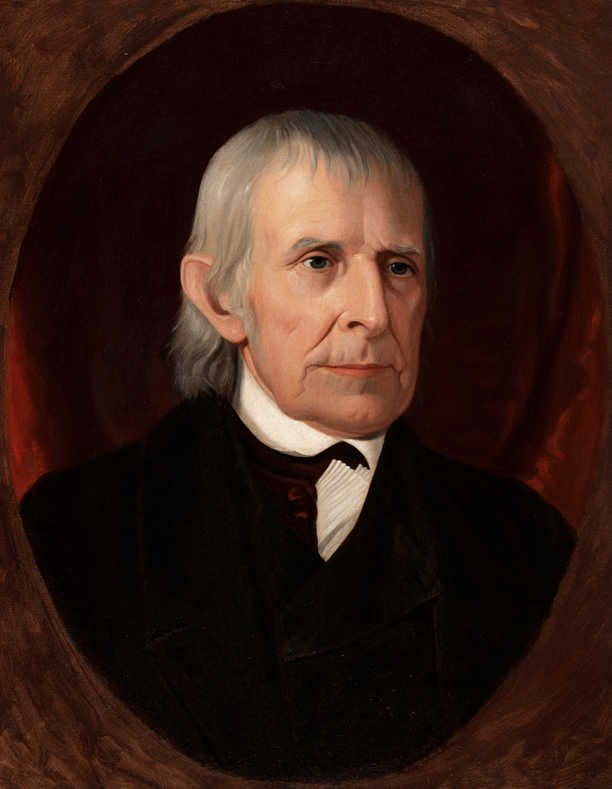
Portrait by Samuel Du Bois (1808–1889), portrait artist from Doylestown, Pennsylvania; via Wikimedia Commons (public domain) · public domain · source

When the United States Mint needed someone to build its first coining press in 1792, it turned to a young toolmaker from a few blocks away. Adam Eckfeldt built the press, helped cut the dies, struck some of the country's earliest coins, and stayed on for half a century — long enough to start the collection that became the National Numismatic Collection.

Who he was

In the summer of 1792, the United States had a constitution, a president, and almost no coins of its own. It also had no mint building — just a half-finished structure on Seventh Street in Philadelphia and a deadline. To make money, the new nation needed machinery, and to make machinery it needed a mechanic. It found one a few blocks away.

Adam Eckfeldt was born in Philadelphia on June 15, 1769, the son of a German immigrant who ran a large smithy making edge-tools and implements. He grew up in his father's workshop, learning ironwork and machinery — exactly the skills a brand-new mint would need. His father had even tinkered with early American coinage himself, so the trade was practically in the family before the Mint existed.

So when the Mint went looking for someone to build a screw press — the heavy, hand-cranked machine that stamps a design into a metal blank — Eckfeldt got the work. He built that first press in 1792, supplied scales and a lathe, and the next year added a device to feed coin blanks into the press automatically. He was, at first, a contractor: paid by the job, not on staff.

He joined the payroll in 1795 and was appointed assistant coiner on January 1, 1796 — a post President Washington signed off on. He held it for eighteen years. Then, in 1814, on the death of his predecessor, he became the Mint's second chief coiner, the official responsible for actually turning approved designs into struck coins. He kept that job for twenty-five years. And here is the remarkable part: after he retired in 1839, he kept showing up and doing the work anyway, unpaid, until he died in 1852. His own family said the Mint barely knew how to replace him.

The craft and the fights

Eckfeldt was not a flamboyant artist. A contemporary who knew him, the engineer George Escol Sellers, described him as "a cautious, careful, orderly and painstaking man… not one of the dashing, pushing, inventive mechanics" — but a man under whose care "many apparently slight improvements were gradually adopted that in the aggregate amounted to a great deal." That is the signature of his whole career: a thousand small refinements that made coins come out cleaner and faster.

His hands were on the metal at the very beginning. Eckfeldt is credited with making the die for the 1792 half disme — the small silver five-cent piece many consider the first coin struck under federal authority. (The word "credited" is doing real work here: the attribution comes largely from Eckfeldt's own later accounts and Mint tradition, and historians still debate exactly who cut which die.) On the 1792 disme pattern — a full ten-cent piece that never went into circulation — numismatic scholars most often place Eckfeldt at the obverse (the heads side), with the artist William Russell Birch likely responsible for the reverse. Even that is disputed; the records from 1792 are thin and the names overlap.

What is clearer is what he did with the first cents. America's first one-cent coins of 1793, the Chain cents, were so crude the public mocked them — a chain on the back looked, to a young republic, uncomfortably like the symbol of slavery rather than union. The design was softened, and the chain was replaced with a wreath. Eckfeldt's role in that redesign is well attested: he engraved the dies for the new Flowing Hair Wreath cent, and some accounts credit him with the design changes themselves — a wreath on the reverse, a sprig of leaves under Liberty's head. (The underlying design is sometimes credited to chief coiner Henry Voigt; what Eckfeldt indisputably did was cut the working dies.) He engraved the first half-cent dies that same year.

He was also a fixer of process, not just punches. He worked out a way to temper a die by spraying water across its face so the steel hardened evenly — a small trick with a big payoff in how long a die survived. Later in his career he resisted, then embraced, the sweeping mechanical changes that Franklin Peale brought back from a tour of Europe's mints. Eckfeldt fretted that "if Mr. Peale had full swing he would turn everything upside down," and preferred to adapt the Mint's existing presses rather than replace them. He lost that argument — the Mint went to steam power in 1836 — but he came around, and ended up enthusiastic about the labor-saving machines he had once distrusted.

His quietest legacy may be the most valuable. As chief coiner, Eckfeldt began setting aside unusual pieces — specially struck "master coins," and the curious foreign coins that arrived at the Mint as raw bullion to be melted. He saved them instead of melting them, sometimes paying out of his own pocket. That hoard became the Mint's Cabinet, and the Mint's Cabinet eventually became the Smithsonian's National Numismatic Collection. The man who built the machine that destroyed old coins also founded the collection that preserved them.

Career timeline

  1. 1769Born June 15 in Philadelphia, son of an immigrant toolmaker.
  2. 1792Builds the U.S. Mint's first screw press as a contractor; credited with the die for the 1792 half disme.
  3. 1793Engraves dies for the redesigned Flowing Hair Wreath cent and the first half cent.
  4. 1796Appointed assistant coiner of the Mint, January 1.
  5. 1814Becomes the Mint's second chief coiner; commission signed by President Madison.
  6. 1836Steam power arrives at the Philadelphia Mint after Eckfeldt's initial resistance.
  7. 1839Officially retires — then keeps performing the chief coiner's duties without pay.
  8. 1852Dies February 6 in Philadelphia, aged 82.

Key facts

Born
June 15, 1769 — Philadelphia, Pennsylvania
Died
February 6, 1852 — Philadelphia, aged 82
Nationality
American
Role
Second Chief Coiner, U.S. Mint (1814–1839)
First job at the Mint
Built the first screw press, 1792 (as a contractor)
Signature works
1792 half disme (die); Flowing Hair Wreath cent dies, 1793; first half cent dies
Lasting legacy
Founded the Mint Cabinet — now the Smithsonian's National Numismatic Collection

In his own words

The engineer George Escol Sellers, who knew Eckfeldt and the early Mint firsthand, remembered him this way:

"A man of staunch integrity, a cautious, careful, orderly and painstaking man; he was not one of the dashing, pushing, inventive mechanics, though under his care many apparently slight improvements were gradually adopted that in the aggregate amounted to a great deal in the economy of working."

Questions collectors ask

Did Adam Eckfeldt really design America's first coins?

It's more accurate to say he made them than designed them. Eckfeldt is credited with cutting the die for the 1792 half disme and engraving the dies for the redesigned 1793 Flowing Hair Wreath cent and the first half cent. The artistic credit for some of these designs is shared or disputed — names like Henry Voigt and William Russell Birch appear in the records too. What's clear is that Eckfeldt's hands were on the steel that struck some of the earliest U.S. coins.

Was the 1792 half disme really the first U.S. coin?

Many consider it so. About 1,500 were struck in July 1792 — before the Mint building was even finished — and the silver was deposited by Thomas Jefferson. Whether it counts as the 'first' depends on how you define an official federal coin, which is why you'll see the claim hedged in careful sources.

What was the Mint Cabinet, and what does Eckfeldt have to do with it?

As chief coiner, Eckfeldt set aside specially struck coins and unusual foreign pieces that arrived to be melted as bullion — sometimes buying them with his own money rather than see them destroyed. That saved collection became the Mint Cabinet, which eventually grew into the Smithsonian Institution's National Numismatic Collection.

Was coining a family business for the Eckfeldts?

Remarkably, yes. Adam's son Jacob R. Eckfeldt served as Mint assayer for about forty years, and a grandson worked at the Mint for over six decades. The family's service to the U.S. Mint spanned well over a century.

Sources